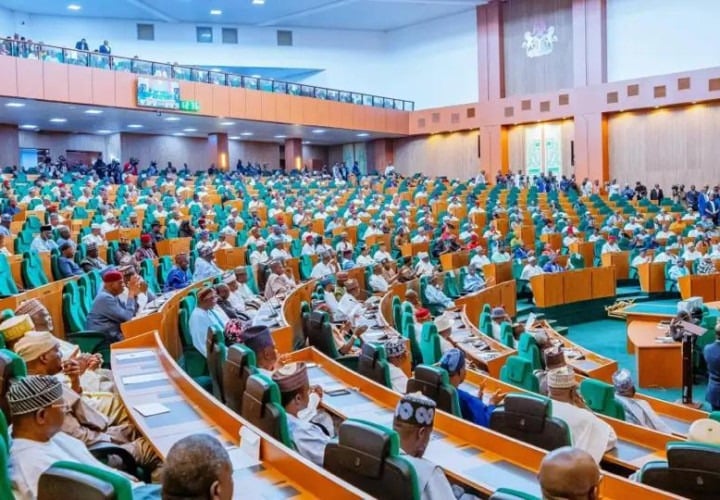
An ad-hoc committee of Nigeria’s House of Representatives has confirmed that illegal alterations were made to some of the country’s recently enacted tax reform laws, including the Nigeria Tax Administration Act, 2025.
The House Minority Caucus committee said in an interim report released Friday that discrepancies exist between versions of the laws passed by the National Assembly and those later published in the official gazette.
The committee was set up after lawmaker Abdulsamad Dasuki raised concerns on the floor of the House over circulating versions of the tax laws that differed from what legislators approved.
In December, the Minority Caucus said it would defend the independence of the legislature, warning that any attempt to impose altered laws on Nigerians amounted to an attack on the constitutional role of the National Assembly.
Following that pledge, the caucus—led by Kingsley Chinda—on Jan. 2 constituted a seven-member fact-finding panel chaired by Victor Ogene. Other members include Aliyu Garu, Stanley Adedeji, Ibe Osonwa, Marie Ebikake, Shehu Fagge and Gaza Gbefwi Jonathan.
On Jan. 3, the House spokesman said Speaker Tajudeen Abbas directed the release of certified copies of four tax reform acts signed into law by Bola Tinubu for public verification. The laws are the Nigeria Tax Act, 2025; Nigeria Tax Administration Act, 2025; National Revenue Service (Establishment) Act, 2025; and Joint Revenue Board (Establishment) Act, 2025.
In preliminary findings signed by Ogene, the committee said a comparison of the certified copies with the gazetted versions confirmed Dasuki’s allegations. It said multiple versions of the Nigeria Tax Administration Act, 2025 were in circulation, with notable alterations.
The panel said instructions to “align” the acts with the Federal Government Printing Press indicated procedural anomalies that illegally encroached on the powers of the legislature.
Among the discrepancies, the committee cited Section 29(1) on reporting thresholds. While the certified version set thresholds at 50 million naira for individuals and 100 million naira for companies, the gazetted version reduced the individual threshold to 25 million naira. The committee described this as an attempt to expand the tax net by unlawfully altering an enacted law.
It also faulted the insertion of new subsections requiring a mandatory 20% deposit of disputed tax sums before appeals from the Tax Appeal Tribunal to the High Court, saying those provisions were not approved by lawmakers.
The committee further said Section 64 of the gazetted law improperly expanded enforcement powers to include arrests and the sale of seized assets without court orders. Other changes included the removal of petroleum income tax and value-added tax from the definition of federal taxes, and a requirement that taxes on petroleum operations be computed in U.S. dollars rather than the currency of the transaction.
The committee said the alterations amounted to an unlawful intrusion into the legislative authority of the House of Representatives.