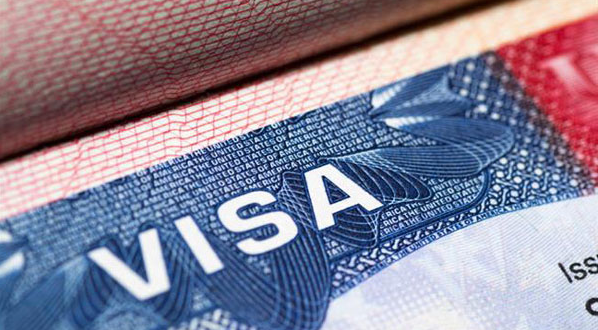
American companies spent at least N3.23 billion to sponsor 880 Nigerian professionals for H-1B specialty worker visas in the 2024 fiscal year, according to data obtained from the United States Citizenship and Immigration Services (USCIS).
The figure is based on the minimum mandatory employer fees for each H-1B petition, covering filing, training, fraud prevention, and asylum programme charges, which total about $2,630 per application. Legal and premium-processing costs were not included. Multiplying the fee by the 880 visas issued to Nigerians gives a total of $2.31 million, equivalent to roughly N3.23 billion at the exchange rate of N1,396 to the dollar as of Jan. 30.
Under US immigration law, employers are required to pay most of the costs associated with H-1B sponsorship. These include a $780 base filing fee, a training fee of $750–$1,500 depending on company size, a $500 fraud prevention fee, and a $600 asylum programme fee. Optional premium processing, which guarantees adjudication within 15 business days, costs an additional $2,805.
Nigerian applicants pay a smaller amount out-of-pocket, including the $190 visa application fee, medical examination costs, and travel expenses for the mandatory consular interview. Sunday PUNCH estimates that the 880 Nigerians spent roughly $167,200 (about N233 million) on visa fees alone, excluding other incidental costs.
According to the US State Department’s Report of the Visa Office 2024, analysed by Nigerian data firm Intelpoint, Nigeria led all African countries in H-1B visa issuances, accounting for 880 of approximately 3,300 visas issued to the continent, or 26.7%. Other top African recipients included Ghana (499), Egypt (364), Kenya (320), and South Africa (208).
Globally, Nigerian recipients represented only 0.4% of the 219,813 H-1B visas issued in FY 2024. Africans collectively received 1.5% of all H-1B visas, with India dominating the programme at about 150,000 visas (nearly 70%), followed by China with 31,900 visas (14.5%). Other top countries included the Philippines, South Korea, Mexico, Canada, the United Kingdom, Taiwan, Pakistan, and Japan.
US employers filed 427,091 H-1B petitions in FY 2024, of which 399,402 were approved. However, only 219,813 visas were issued, representing 51.5% of all approved petitions.
The H-1B programme, established under the Immigration Act of 1990, allows US employers to hire foreign nationals temporarily in “specialty occupations” requiring highly specialized knowledge and at least a bachelor’s degree. The programme is administered jointly by USCIS under the Department of Homeland Security and the Department of Labor’s Employment and Training Administration.
Employers must submit a Labour Condition Application to certify they will pay the prevailing wage and ensure hiring the foreign worker does not negatively affect US workers. After USCIS approval, workers attend a visa interview at a US embassy or consulate in their home country.
H-1B status is initially granted for three years, renewable up to six years. Workers may later transition to permanent residency through employer-sponsored green card applications, though backlogs—particularly for Indian and Chinese nationals—can extend processing times for years.
From Sept. 21, 2025, a new $100,000 fee on H-1B petitions for workers outside the US took effect under a presidential proclamation, adding to the cost burden for employers seeking skilled foreign workers. The American Immigration Council noted that the fee could significantly impact employers’ ability to secure highly educated talent, with prior costs ranging between $2,000 and $5,000 per petition.