The massacre of residents in Woro, a remote community in Kaiama Local Government Area of Kwara State, that left an estimated 176 people dead was the result of a planned expansion of jihadist activity that security agencies failed to stop despite advance warnings, according to findings by Nigerian Mirror.
Investigations identified Abubakar Saidu, also known as Sadiku, as the commander behind the attack. Sadiku, whose militant activities span more than a decade, is described by security analysts as a leading Boko Haram splinter figure pushing insurgency westward into Nigeria’s North-Central region.
Sadiku emerged as a trusted lieutenant of the late Boko Haram leader Abubakar Shekau in 2014 before relocating from the North-East under sustained military pressure. By 2026, analysts say he had established himself as a dominant militant figure operating from forest corridors linking Niger and Kwara states.
Security sources say his faction consolidated power after setting up a base in the Kainji Forest Reserve in July 2025, abandoning bandit-style operations for a more ideologically driven campaign. The forest, stretching across Niger and Kwara, has since become a hub for insurgent recruitment, weapons movement and coordinated attacks across parts of Kwara, Niger, Kebbi and Kaduna states.
Researchers say the Woro killings followed patterns seen in recent attacks in Niger State and suggest growing operational overlap between Sadiku’s faction and Jama’at Nusrat al-Islam wal-Muslimin, an al-Qaida-linked group active in the Sahel. The attack occurred less than four kilometers from Nuku, where JNIM claimed its first attack in Nigeria in October 2025.
According to community leaders, Woro residents received a warning weeks before the attack. The village head, Salihu Umar, said a letter dated Jan. 8 and signed by Jama’atu Ahlis Sunna Lidda’adati wal-Jihad was delivered to him, requesting a meeting with local leaders and promising not to harm residents. Umar said he forwarded the letter to traditional authorities and the Department of State Services.
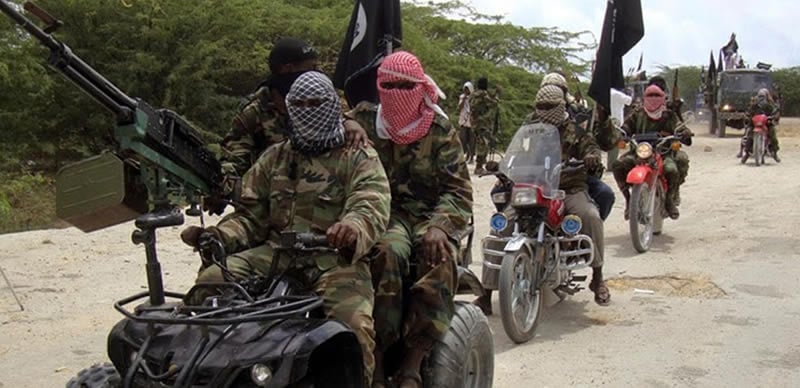
On the day of the attack, witnesses said gunmen arrived around 5 p.m. on motorcycles, armed with assault rifles and explosives. They surrounded the community, blocked escape routes and set the emir’s palace on fire before beginning mass executions. Survivors said the attackers bound men’s hands before killing them and abducted women and children as they retreated into nearby forests after midnight.
Residents reported seeing a helicopter briefly hover over the area without intervening. A military aircraft later forced the attackers to withdraw temporarily, but they regrouped and resumed killings, luring residents out with a call to prayer, witnesses said.
Survivors described a coordinated assault lasting several hours, with homes and shops burned and motorists attacked on nearby roads. Local officials said more than 170 bodies were buried within two days, while searches for missing residents continued.
Security officials acknowledged that rescue efforts were delayed after attackers planted explosives on access roads, slowing troop movements. Intelligence officers said a military vehicle was damaged by an improvised explosive device, forcing personnel to proceed cautiously.
A Kwara-based security analyst, Kabiru Adamu, warned that attacks would persist without structural reforms, improved coordination and accountability among security agencies. He cited porous borders, limited rural security presence and weak enforcement as key vulnerabilities.
In response, Kwara State Gov. AbdulRahman AbdulRazaq approved a seven-member committee to coordinate humanitarian relief and reconstruction in Woro. State officials said the panel would engage community leaders and assess survivors’ needs over four weeks.
Sen. Sadiq Umar, who represents Kwara North, said more than 50 survivors were receiving treatment in hospitals in Ilorin and called for sustained security operations in the district, which he said has faced repeated attacks.