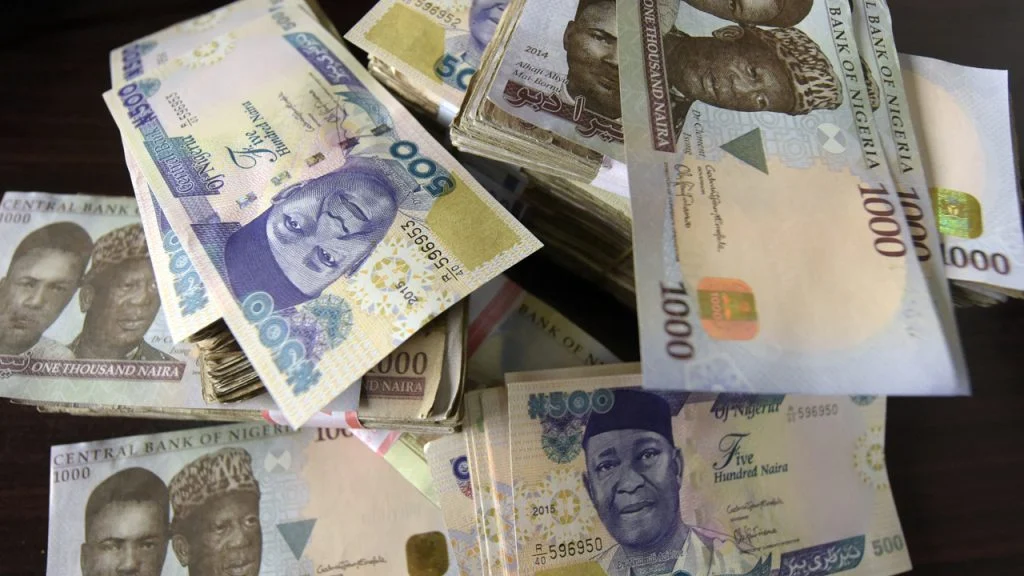
The naira has strengthened sharply in recent weeks, reaching one of its highest levels in nearly two years, even as rising foreign portfolio inflows raise the risk of investor profit-taking later in the year, according to a macroeconomic update from CardinalStone.
The report said the naira has appreciated about 6.9% year to date in the official market, reaching 1,347.78 per dollar on Monday, signaling improved liquidity in the official foreign exchange window.
Despite the gains, the spread between the official and parallel markets persisted. The parallel market initially traded at a 5.7% premium before narrowing to roughly 3.2% following renewed interventions by the Central Bank of Nigeria. CardinalStone said the narrowing spread suggests “there was more liquidity in the official window than in the parallel market.”
Last week, the CBN allowed licensed Bureau de Change operators to access foreign exchange through authorized dealers at prevailing market rates, with a weekly purchase limit of $150,000 per BDC, subject to KYC requirements. Unused balances must be sold within 24 hours, and cash transactions are capped at 25% of total FX trades, with settlement required through licensed financial institutions.
CardinalStone said with 82 licensed BDCs, potential supply to the segment could reach about $50 million monthly, far below the pre-COVID level of more than $1 billion. The report noted that “material improvements in the FX market” have reduced speculative demand and routed most corporate FX requirements to the official window, easing retail FX pressures and compressing the parallel market premium.
The report also warned that continued currency gains could trigger portfolio rebalancing by foreign investors. Analysts said Nigeria’s carry trade remains one of the most compelling in emerging and frontier markets, attracting sizable foreign portfolio inflows, estimated at roughly $12 billion to $14 billion.
“Assuming a significant proportion of the 2025 inflows entered the Nigerian market at N1,500 per dollar, FX gains of 22.4% could be realized if the naira strengthens to N1,200–N1,250 per dollar. Such gains could increase the risk of foreign portfolio exits, especially ahead of the general elections,” the analysts said.
Ahead of the CBN’s Monetary Policy Committee meeting Monday, indicators are sending mixed signals. Inflation is moderating, and short-term rates are converging around 22%, about 500 basis points below the 27% monetary policy rate. At the same time, the CBN has expressed low tolerance for excess liquidity, citing it as a risk to the stability achieved through recent policy reforms.
So far this year, the CBN has net-issued N10.9 trillion through Open Market Operations and maintained the standing deposit facility rate to encourage banks to deposit excess funds with the central bank. Analysts said the CBN is also concerned about election-related liquidity, which is expected to rise in the second half of the year. Of the total expected liquidity of N44.2 trillion in 2026, over 75% is projected to materialize in the first half of the year.
CardinalStone said the central bank may hold the policy rate steady to signal caution about liquidity while adjusting the asymmetric corridor to align the SDF rate with OMO yields, maintaining the attractiveness of OMO and encouraging banks to remain key counterparties for foreign portfolio investors. Analysts assigned a 60% probability to this outcome, and a 40% probability to a potential 50–100 basis point rate cut.
Looking ahead, CardinalStone said forward-market pricing suggests a weaker naira later in the year. Six-month non-deliverable forwards indicate a rate near N1,449.96 per dollar in the early second half of 2026, with a base-case range of N1,350–1,450 per dollar for the year.