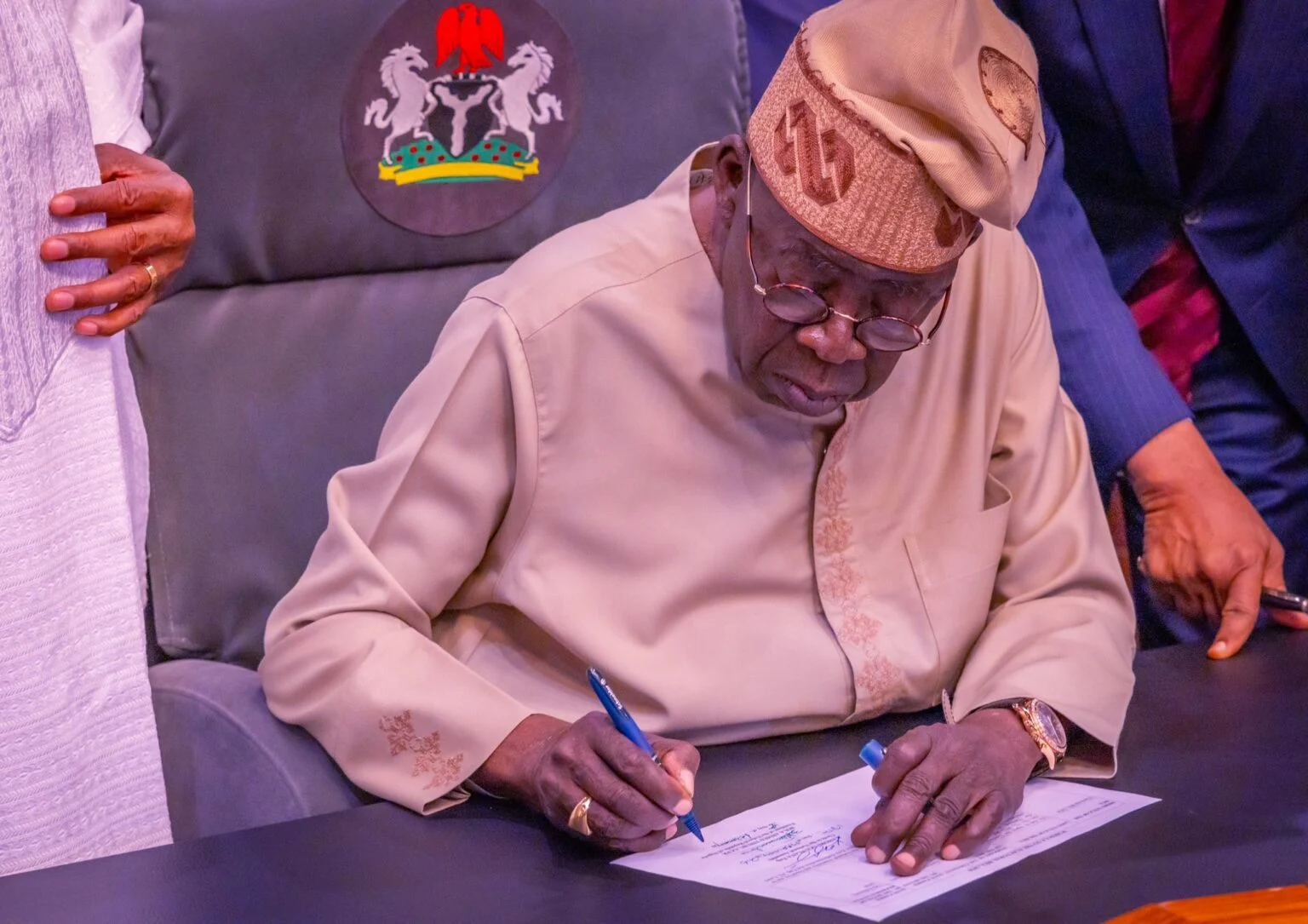
Fresh questions and uncertainty are emerging across Nigeria’s oil and gas sector following President Bola Tinubu’s executive order directing that all oil and gas revenues be immediately remitted to the Federation Account for distribution among the three tiers of government.
The directive effectively halts the retention of certain internally generated revenues by agencies, including the Nigerian Upstream Petroleum Regulatory Commission (NUPRC), the Nigerian National Petroleum Company Limited (NNPCL), and the Midstream and Downstream Gas Infrastructure Fund (MDGIF). Industry sources and experts said that the absence of a clearly defined alternative funding model has raised concerns about operational stability, statutory obligations, and investor confidence.
Officials at NUPRC, speaking on condition of anonymity, warned that reliance on conventional budgetary allocations could compromise the regulator’s independence, delay decision-making, and weaken oversight in a sector vulnerable to oil theft and pipeline vandalism.
“The Petroleum Industry Act clearly provides for the commission’s funding, including a four percent cost of collection. Can an executive order override an Act of the National Assembly?” one official asked. “Our salaries, monitoring activities, inspections, and staff welfare are funded through this statutory mechanism. Without it, efficiency and security could be affected.”
The order has also created uncertainty around frontier exploration initiatives and the operational scope of the MDGIF, which supports the development of gas infrastructure. Analysts warned the move could affect Nigeria’s plans to increase crude production to three million barrels per day by 2030 and attract $12 billion in annual investments.
At NNPCL, senior officials said the directive could disrupt production-sharing contract operations and impact hundreds of staff overseeing deepwater assets. They noted that royalties and taxes under existing contracts are remitted as barrels, not cash, and that redirecting revenues could complicate ongoing loan repayments and investor confidence.
Nevertheless, some officials remain cautiously optimistic, emphasizing that operations, including production, gas processing, and ongoing projects, would continue under the new fiscal framework.
Supporters of the order, including the Petroleum Products Retail Outlets Owners Association of Nigeria (PETROAN), praised it as a move to enhance transparency, strengthen fiscal discipline, and reposition NNPCL as a commercially driven entity. PETROAN President Dr. Billy Gillis-Harry said, “By compelling NNPCL to remit revenues directly, the order reinforces the company’s transformation into a commercially disciplined national energy company.”
The Nigeria Union of Petroleum and Natural Gas Workers (NUPENG) has called for an urgent stakeholders’ meeting to clarify the implications of the order for employment, labor agreements, and the Petroleum Industry Act.
Conversely, the Petroleum and Natural Gas Senior Staff Association of Nigeria (PENGASSAN) has rejected the order, warning that it threatens staff welfare, operational autonomy, and the financial stability of key institutions. Acting General Secretary Jerry Amah said the union would hold an emergency meeting to chart its next course of action.
The Federal Government has confirmed that implementation has begun, with revenues channeled into designated Federation Account structures. The Minister of State for Finance and Chairman of the Federation Account Allocation Committee, Dr. Doris Uzoka-Anite, reminded agencies that any breach of the directive would be considered a violation of both the executive order and constitutional fiscal provisions.
Economists and energy law experts have cautioned that while the executive order is constitutionally supported, it raises legal and operational complexities. Professor Ayo Ayoade of the University of Lagos said the move could conflict with the Petroleum Industry Act and urged careful stakeholder engagement to avoid destabilizing operations and undermining investor confidence.
Nigeria Revenue Service Executive Chairman Zacch Adedeji defended the government’s shift, describing it as a move to eliminate “cost of collection” practices and ensure regulators focus on their core mandates. “It is the duty of government to fund its agencies, not dependent on how much revenue they collect,” he said.
The executive order is expected to significantly affect funding, operations, and investment planning across Nigeria’s oil and gas sector, with stakeholders calling for clarity on implementation and long-term fiscal arrangements.