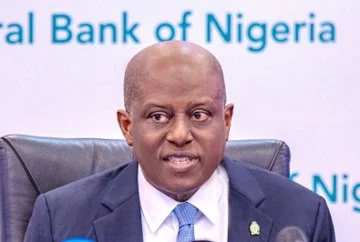
Central Bank of Nigeria Governor Olayemi Cardoso said Nigeria’s net foreign exchange reserves rose sharply to $34.80 billion at the end of 2025, up 772% from $3.99 billion at the end of 2023, signaling a significant strengthening of the country’s external buffers.
In a statement issued Monday, the central bank said the increase in both gross and net reserves reflected stronger external sector fundamentals and sustained policy reforms.
Gross reserves — the total foreign assets held by the central bank, including foreign currencies and gold — stood at $50.45 billion as of Feb. 16, 2026, Cardoso said. Net reserves, which exclude short-term liabilities and obligations, provide a clearer measure of funds available to support the naira and meet external commitments.
Cardoso said net reserves rose to $34.80 billion by the end of December 2025, compared with $23.11 billion at the end of 2024. Over the same period, gross reserves increased to $45.71 billion from $40.19 billion.
The governor said the gains reflected improved transparency and credibility in foreign exchange management, which helped boost investor confidence, attract stronger inflows and improve reserve management practices.
He added that the 2025 net reserve figure exceeded the country’s total gross reserves of $33.22 billion recorded at the end of 2023.
According to Cardoso, the increase strengthens Nigeria’s ability to meet external obligations, support exchange rate stability and reinforce macroeconomic resilience.
He said the reserve buildup was driven by favorable trade conditions, a current account surplus, rising non-oil exports and increased diaspora remittances.
“Underpinning all this, quite frankly, is market confidence,” Cardoso said. “Without market confidence, no matter what you do, you will significantly sub-optimize.”
Cardoso said the central bank remains committed to maintaining adequate reserve buffers, supporting orderly foreign exchange market operations and sustaining macroeconomic stability.