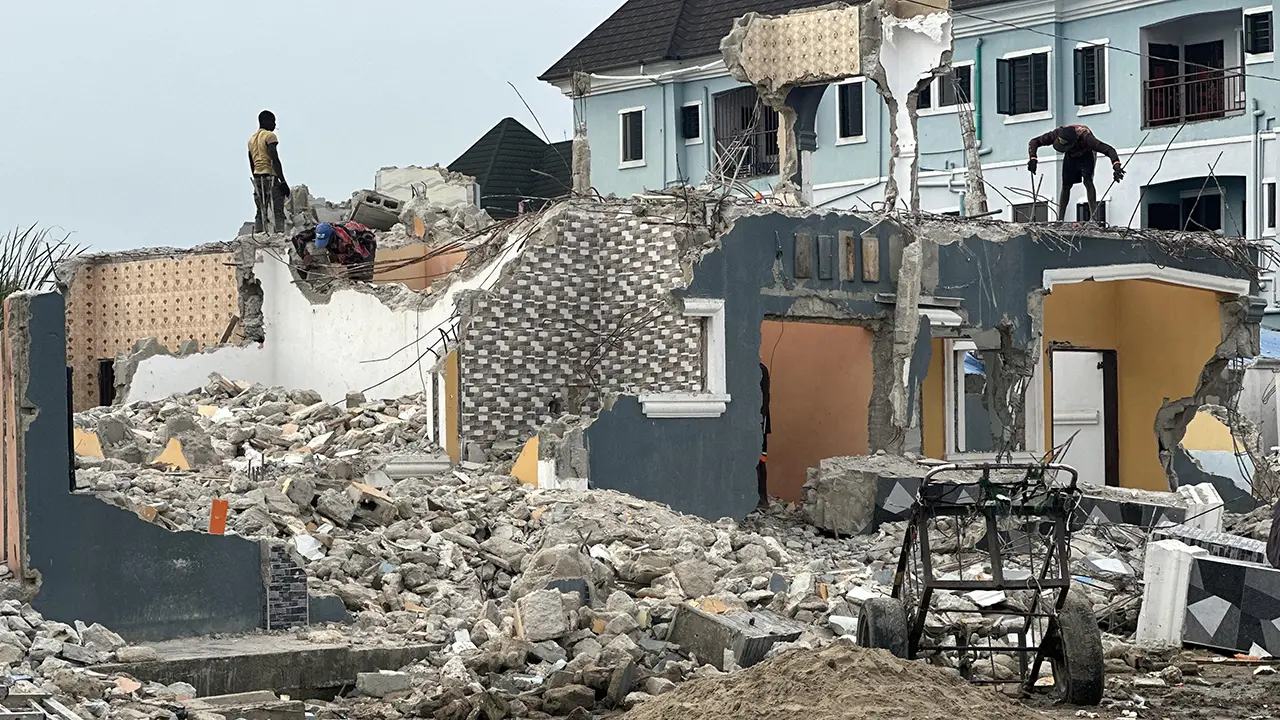
Stakeholders in Nigeria’s real estate sector have condemned the demolition of about 50 buildings in Surulere community in Lagos State, blaming suspected land grabbers popularly known as “Omo Onile” and calling for greater transparency and proper documentation in property transactions.
Residents in the Surulere community in Amikanle, near the Command area of Alimosho Local Government Area, say they are counting their losses after several houses were demolished in the area.
Local residents said the attackers invaded the community on Jan. 27, 2026, demanding between 15 million naira and 25 million naira from homeowners. They said buildings belonging to those who failed to pay were demolished.
Israel Ihaza, founder and chief executive officer of Oikus, condemned the incident and called for more transparency and structure in the real estate sector.
“It’s sad how some individuals continue to bastardize government authority and existing regulatory structures to carry out illegal activities,” Ihaza said. “Incidents like this are deeply troubling and painful for everyone who believes in the rule of law and the future of real estate in Lagos.”
He said disorder often thrives where property ownership records are unclear and enforcement mechanisms are weak.
“When ownership records are unclear, enforcement is weak and property visibility is fragmented, it creates room for abuse by bad actors,” he said.
Ihaza added that authorities are working toward stronger systems, including digital oversight and improved regulatory enforcement, to address long-standing challenges in the sector.
“Efforts are underway to professionalize the sector, digitize records and improve accountability across the value chain,” he said. “These reforms take time, but they are necessary.”
He noted that the so-called Omo Onile menace has remained a structural challenge in Lagos for years and said the destruction of homes often causes severe financial and emotional losses for victims.
“When a house is demolished, the damage goes far beyond bricks and mortar,” he said. “It’s life savings, retirement plans, children’s school fees and stability.”
He warned that such incidents could also discourage investment in the housing sector, particularly from Nigerians in the diaspora and property developers.
“This creates fear among investors and developers, and fear slows economic growth,” Ihaza said.
Also commenting, Sola Enitan, legal counsel to project-affected persons within the 150-meter setback of the Lagos-Calabar Coastal Highway, said demolition had increasingly become a means of extortion in Nigeria, particularly in Lagos.
He urged affected homeowners to pursue legal action to protect their rights.
Enitan also highlighted the financial implications of such demolitions, estimating that 52 buildings valued at about 50 million naira each would amount to roughly 2.6 billion naira in losses.
“For every single house you demolish, ten people will take their money elsewhere, and housing for at least 100 people will be removed from the sector,” he said.
He added that repeated incidents of property destruction could further worsen Nigeria’s housing deficit and discourage investment in the real estate industry.