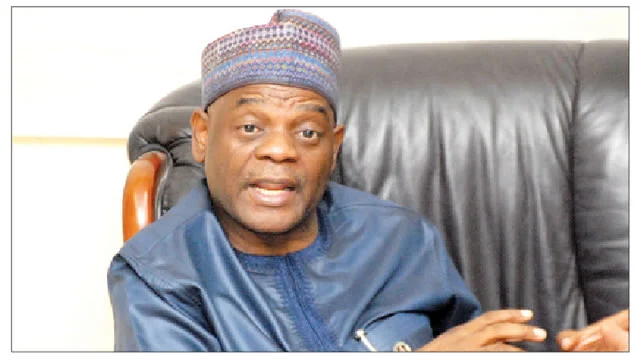
Nigeria can significantly reduce the number of citizens seeking medical treatment abroad by strengthening medical training, upgrading healthcare facilities and expanding the capacity of tertiary institutions, the Executive Secretary of the Tertiary Education Trust Fund said Tuesday.
Sonny Echono spoke in Abuja when the Chief of the Air Staff, Air Marshal Sunday Kelvin Aneke, led a Nigerian Air Force delegation on a courtesy visit to TETFund headquarters.
Echono said the federal government had directed efforts toward improving the training of healthcare professionals and strengthening medical facilities in tertiary institutions across the country.
“Only about a week ago, I had extensive conversations with the Minister of Education. As we thrive, Mr. President has been very supportive, and one of the directives he gave us was to see how we can reverse medical tourism in the country,” he said.
“We should significantly improve the facilities available, not only for the teaching of the four core medical courses — medicine, pharmacy, nursing and dentistry — but also for the provision of healthcare for our teeming population.”
He said TETFund was expanding its support beyond university faculties of medicine to teaching hospitals to improve clinical training and healthcare services.
“That is why we are not only focusing on our faculties of medicine; we are extending the same support to teaching hospitals as well. When our students go for their clinical training, they will have accommodation within those teaching hospitals. We are also providing medical equipment across the board,” Echono said.
He added that strengthening the entire healthcare workforce — not just doctors — was essential to building a system capable of meeting the country’s medical needs.
“At the top of the pyramid, we have medical doctors, but others provide critical support services. The question is how we can significantly increase the numbers in those relevant supporting fields,” he said.
Echono also commended the role of the Nigerian Air Force in national development, noting that the Air Force Institute of Technology had benefited from several TETFund interventions.
He said some requests from the institution had already been captured in the fund’s 2026 intervention plan, including staff accommodation and perimeter fencing.
“AFIT is a direct beneficiary of TETFund, and some of your pleas have already been captured in this year’s intervention for AFIT, including staff accommodation. The issue of the perimeter fencing has also been scheduled to commence this year, although it will be done in phases because the institution is very large and expensive,” he said.
Responding to a request for support in aviation medicine, Echono said he would present the proposal to the TETFund Board of Trustees under federal initiatives aimed at strengthening medical education and healthcare infrastructure.
“I pledge to you that I will make a special case to the Board of Trustees under the presidential initiative on providing equipment and facilities for medical establishments and related fields,” he said.
Echono reaffirmed TETFund’s commitment to improving the learning environment in Nigerian tertiary institutions through expanded hostel accommodation and stronger research infrastructure.
He said the interventions were designed to improve the quality of education and position Nigerian institutions to compete globally and attract international students.
Earlier, Aneke commended TETFund for its sustained support for tertiary education, particularly its interventions at the Air Force Institute of Technology.
“For the Nigerian Air Force, TETFund has remained a long-standing strategic partner. Over the years, the fund’s interventions in the Air Force Institute of Technology have been truly remarkable and impactful,” he said.
Aneke said the visit was also aimed at exploring further collaboration in medical training.
“Today, the institute, which has been around for over 48 years, has become one of the most sought-after institutions of higher learning in Nigeria for aviation-related studies, owing to its reputation for academic excellence, strict discipline and zero tolerance for strikes,” he said.
He also appealed for TETFund’s intervention in the Nigerian Air Force School of Medical Sciences and Aviation Medicine, noting that the institution trains healthcare personnel for both military and civilian needs.
“The school will not only cater to the Nigerian Air Force but will also serve our civilian counterparts,” he said.
Nigeria has long faced significant medical tourism, with many affluent citizens, including political leaders and public officials, seeking treatment abroad because of gaps in healthcare infrastructure, limited specialized equipment and shortages of skilled medical personnel.
The country also faces persistent brain drain as doctors, nurses and other healthcare professionals migrate to countries such as the United Kingdom, Canada and the United States for better training, working conditions and pay, a trend that has strained local hospitals and medical training institutions.