






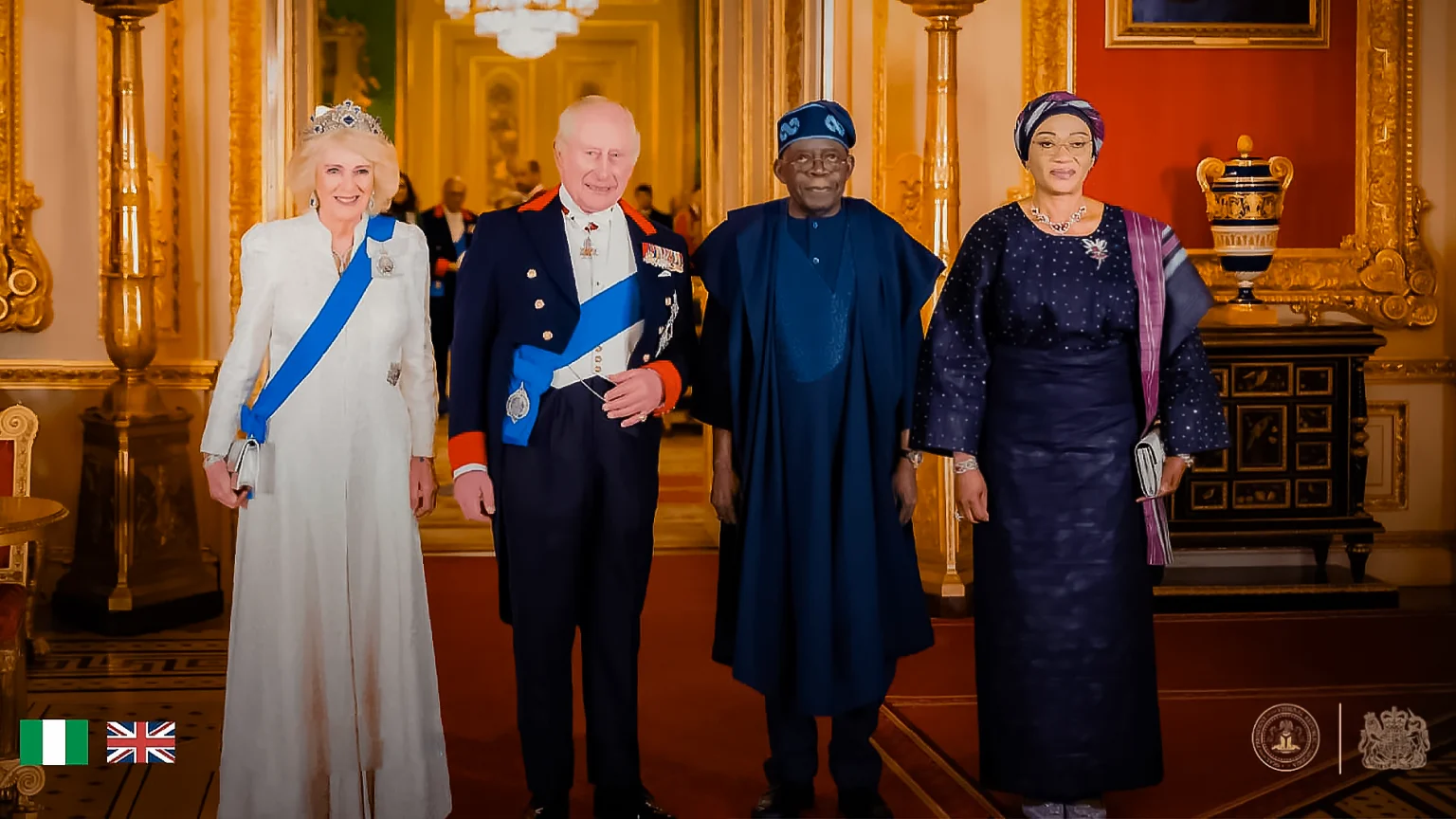
King Charles III and Bola Ahmed Tinubu met with national and international interfaith leaders at Vicars’ Hall in Windsor on Wednesday, seeking solutions to ongoing violence in Nigeria that has drawn global concern.
The meeting, held during Tinubu’s state visit to the United Kingdom, also included Nigeria’s first lady, Oluremi Tinubu, according to Buckingham Palace.
The talks come amid controversy over allegations of a targeted genocide against Christians in Nigeria. While some international groups describe the violence as religious persecution, Nigeria’s government maintains that the attacks are part of a broader insurgency affecting multiple communities.
Speaking at a state banquet, Tinubu highlighted the contributions of Nigerians living in the United Kingdom, describing them as “one of the most dynamic diaspora communities” contributing to the country’s economy.
He noted that Nigerian-trained doctors and nurses form a significant portion of international medical professionals in the UK’s National Health Service.
Tinubu also addressed Nigeria’s security challenges, particularly terrorism linked to instability in the Sahel region, and emphasized the importance of continued cooperation with the United Kingdom. He said he looked forward to meeting British Prime Minister Keir Starmer to strengthen bilateral ties.
“Despite these challenges, Nigeria approaches the future with hope and confidence,” Tinubu said. “We are a nation of diverse and vibrant people, determined to realize our full potential.”
King Charles acknowledged Nigeria’s growing role in the UK economy and the strengthening relationship between both countries.
The visit — the first by a Nigerian leader in 37 years — aims to deepen economic and diplomatic ties. Nigeria’s government said discussions include investment, security, education, health care and cultural exchange.
Ahead of the visit, British officials announced new investment agreements expected to create jobs. Tinubu is also expected to witness the signing of a £746 million deal to modernize Lagos ports in Apapa and Tin Can Island.
Meanwhile, the Socio-Economic Rights and Accountability Project (SERAP) urged King Charles to raise concerns about human rights in Nigeria, including alleged restrictions on free speech and the use of laws to target journalists and activists.
In a letter signed by deputy director Kolawole Oluwadare, SERAP called on Nigerian authorities to withdraw lawsuits against civil society groups and reform laws it says are used to suppress dissent.
The organization also raised concerns about conditions for internally displaced persons in northern states, including Borno, Benue and Plateau, citing limited access to health care, movement and legal protections.
Tinubu’s visit has drawn mixed reactions in Nigeria. Some critics questioned the size of the delegation, which includes several governors and federal officials, calling it excessive amid economic challenges at home.
Others, however, argue the trip could deliver long-term economic benefits.
Criticism intensified following reports of deadly attacks by armed groups in Katsina state during the visit, raising concerns about governance in the absence of key officials.
Despite the backlash, the visit has included ceremonial engagements with members of the British royal family, including Queen Camilla and the Prince and Princess of Wales.
In a gesture of respect for Ramadan, the King adjusted the schedule by canceling a formal lunch, allowing Tinubu, a Muslim, to observe fasting before attending the evening state banquet.
The last Nigerian state visit to the UK took place in 1989, when Ibrahim Babangida was hosted by Queen Elizabeth II.
Separately, Nigeria’s education minister said plans are underway for a partnership with Coventry University to establish a campus in Lagos. The proposed institution would offer UK-accredited degrees locally, with admissions expected as early as 2026, pending regulatory approval.
Officials say the initiative is aimed at expanding access to quality education and strengthening Nigeria’s workforce.








