Federal civil servants, under the Joint National Public Service Negotiating Council, have issued a March 31 ultimatum to the Federal Government over delays in implementing a 40% peculiar allowance tied to the N70,000 minimum wage.
The workers warned that failure to meet the deadline could trigger industrial action, raising concerns about a potential nationwide disruption of government activities as frustration grows among affected employees.
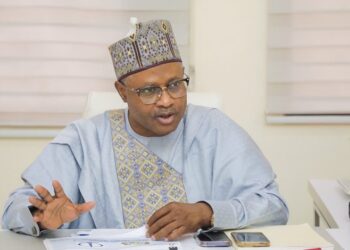
In a letter to the Executive Chairman of the National Salaries, Incomes and Wages Commission, JNPSNC National Chairman Benjamin Uyantomni and National Secretary Olowoyo Gbenga described the delay as “undue,” citing the absence of a required circular and salary templates for implementing the allowance.
“The National Leadership of the JNPSNC is constrained to draw the attention of the management of the NSIWC to the undue delay in issuing the appropriate circular and salary templates required to facilitate the payment of the 40 per cent peculiar allowance,” the letter said.
The union said it first wrote to the commission on Sept. 1, 2025, but had yet to receive a response.
“This deliberate inaction has denied thousands of public servants their rightful entitlement,” it added, noting that the allowance is a key component of the new wage structure approved by the Federal Government.
According to the council, the approval had already been transmitted to the commission by the Office of the Head of the Civil Service of the Federation, but implementation has stalled, fueling dissatisfaction among workers.
At a March 9, 2026 meeting attended by leaders of affiliate unions, the council demanded immediate action, warning that workers’ patience had been “severely overstretched.”
“We demand a positive response on or before Tuesday, March 31, 2026. Failure to comply will leave the council with no option but to take necessary action. No retreat, no surrender,” the letter said.
The dispute follows the Federal Government’s approval of a new national minimum wage of N70,000 after negotiations with organized labor.
While the increase aims to cushion the effects of inflation, fuel subsidy removal and rising living costs, implementation has been marked by delays and disputes over allowances and adjustments across the public service.
The 40% peculiar allowance is intended to address pay disparities and compensate for job-specific conditions within the federal civil service. Its delay has raised concerns that the wage reform may not translate into real income gains.
The ultimatum signals the potential for broader labor unrest in Nigeria’s public sector as economic pressures persist and the value of wages continues to decline.