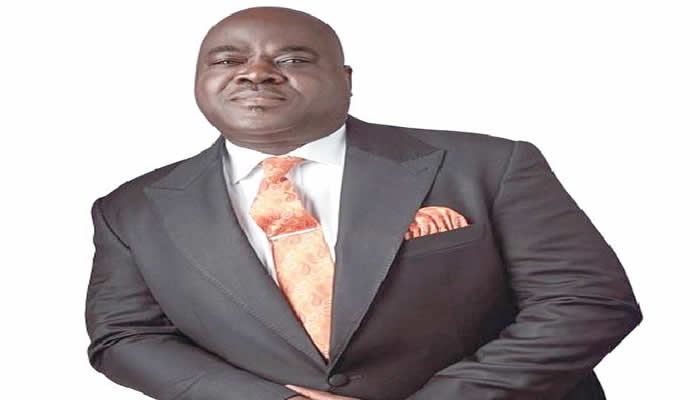
Amid soaring fuel costs and persistent electricity challenges affecting homes and businesses, the Chief Executive Officer of Common Sense Group, Dr. Olumide Emmanuel, has urged Nigerians to embrace solar energy, citing the example of the Presidential Villa.
Speaking in an interview, Emmanuel also discussed Nigeria’s economy, President Bola Tinubu’s reforms, savings, investments and wealth creation.
He said recent increases in global oil prices, driven partly by geopolitical tensions, could provide Nigeria with additional revenue, but stressed the need for proper management of public funds.
“We have more money available as a result of the U.S.-Iran war. The question is how do we utilise the money?” he said.
Emmanuel said state governments now receive higher allocations following the removal of fuel subsidy, but argued that many are not using the funds effectively for development.
He said Nigeria’s challenge was not revenue generation but financial management.
“I don’t think our country has a revenue problem. I think we have a management and multiplication problem,” he said.
The economist said corruption and poor fiscal discipline had prevented Nigeria from translating its earnings into improved living standards.
Emmanuel also defended fuel pricing, saying the deregulated market reflected economic realities, particularly the cost of crude oil.
He praised the Dangote Petroleum Refinery, saying it had helped improve fuel availability in the country.
“If there were no Dangote refinery, people would still be queuing for fuel,” he said.
On infrastructure, Emmanuel said poor transport systems, weak power supply and inadequate logistics continued to drive up costs for businesses and consumers.
He cited rising diesel expenses in his organisation, which he said had doubled from N7.5 million to N15 million monthly, forcing a reconsideration of energy sources.
He said the company was considering a N130 million solar installation, arguing that it would be more cost-effective in the long run.
“Do you know the whole of Aso Rock is solar-powered? What are they telling you? Go and do solar,” he said.
Emmanuel said Nigeria’s power sector remained inefficient due to weak generation, transmission and distribution systems.
He rated the current administration six out of 10 on economic performance, noting that reforms such as fuel subsidy removal and foreign exchange liberalisation were positive but required better implementation.
He also praised the new tax law, saying it would ease the burden on low-income earners and small businesses if properly implemented.
On personal finance, Emmanuel urged Nigerians to prioritise savings and investment, advising that at least 10 per cent of income should be set aside.
He said wealth creation depends on value creation, problem-solving and multiple income streams.
“Money flows in exchange for value. To make money, you must solve problems and meet needs,” he said.
Emmanuel also advised Nigerians to invest in assets such as stocks, bonds and mutual funds, noting that the Nigerian stock market had performed strongly in recent years.
He warned that wealth sustainability depends on proper financial management and diversification.
He added that businesses should focus on long-term value creation rather than family ownership structures that may not survive across generations.