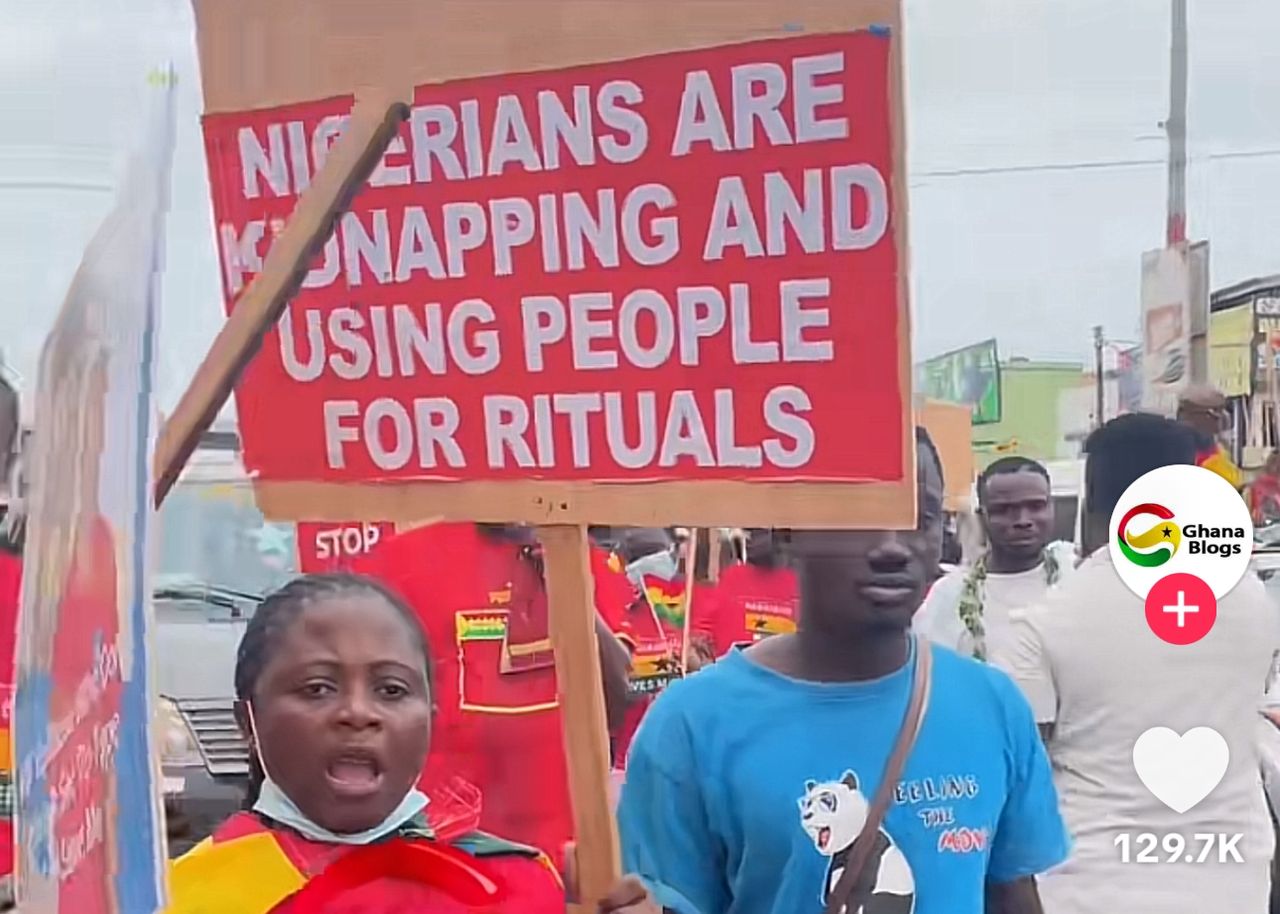
A wave of anti-Nigerian sentiment erupted in Ghana this week as large groups of protesters took to the streets, accusing Nigerian nationals of involvement in prostitution, ritual killings, and other criminal activities.
In a viral video circulating on Tuesday, many protesters were holding placards—voicing frustration over what they claim is a growing threat to public safety, morality, and national identity. Slogans on the placards included: “Armed robbery and violent attacks must stop”, “Our health at stake due to mass prostitution”, “Who protects the rights and freedoms of Ghanaians?”, “Nigerians are kidnapping and using people for rituals”, “Our kids are going missing because of Igbos”.
The crowd also displayed a photo of a man allegedly killed by a Nigerian in Accra, using it to support claims of rising violence linked to foreign nationals.
A visibly upset woman speaking on camera said Nigerians, particularly the Igbo ethnic group, have infiltrated every corner of the country. “They’re taking over our markets, our villages. There’s even an Igbo king here in Ghana. Our laws don’t allow foreigners to run these kinds of businesses. Yet they’re doing as they please,” she said.
Another protester added, “If they don’t leave, they should be arrested, tried, and sent back. Illegal immigrants shouldn’t even be given notice. If you break the law, you pay the price.”
Tinubu Moves to Restore Fubara as Rivers Governor
The protests have reignited historical tensions. Many Ghanaians recall the 1983 mass expulsion known as “Ghana Must Go,” when Nigeria, under then-President Shehu Shagari, ordered around two million undocumented West African immigrants—mostly Ghanaians—to leave the country. The phrase later became associated with the large plastic checked bags in which many Ghanaians packed their belongings, symbolising forced migration and strained diplomatic ties.
Despite the current unrest, the Ghanaian government has not yet issued an official statement addressing the protesters’ demands or clarifying its position on the presence of Nigerians in the country.
Observers warn that unless the government acts swiftly, the situation could escalate into xenophobic violence, damaging both diplomatic relations and regional unity in West Africa.