Nigeria’s federal government spent 57.78 billion naira ($39.8 million) on security-related projects and operations during the first four months of 2026, even as attacks by armed groups, kidnappers and bandits continued across the country, according to government spending records and security reports.
Data from the Open Treasury Portal showed the expenditure represented a 127.9% increase from the 25.35 billion naira spent during the same period in 2025.
The spending covered defense equipment procurement, military and police infrastructure, security services and related projects. However, analysts questioned the impact of the increased expenditure as insecurity remains widespread across several regions.
The government allocated 4.66 trillion naira to security in the 2026 budget. As of April, only 1.24% of that amount had been spent.
Defense equipment procurement accounted for the largest share of expenditures at 21.39 billion naira, or about 37% of total spending. Another 14.16 billion naira was spent on security equipment, while 5.84 billion naira went to military barracks construction and 5.17 billion naira to police stations and barracks.
Additional spending included 3.26 billion naira for rehabilitation of defense equipment, 2.39 billion naira for defense facilities, 2.16 billion naira for repairs of military barracks and 3 billion naira for security services. Security votes accounted for 320.94 million naira.
Despite the increased spending, no funds had been released for “Operation Lafiya Dole and Other Operations of the Armed Forces,” a military operations budget line that received a 500 million naira allocation in the 2026 budget.
Similarly, no spending was recorded for the kitting of armed forces personnel, despite a budget allocation of 2.53 billion naira.
A comparison with 2025 showed defense equipment spending more than doubled from 9.48 billion naira to 21.39 billion naira, while military barracks construction rose from zero spending to 5.84 billion naira.
The spending figures come as a police security report documented at least 98 criminal incidents nationwide within a seven-day period.
According to the report, the incidents included 37 homicide cases, 27 bandit attacks, 24 kidnappings, eight armed robberies and two terrorism-related incidents.
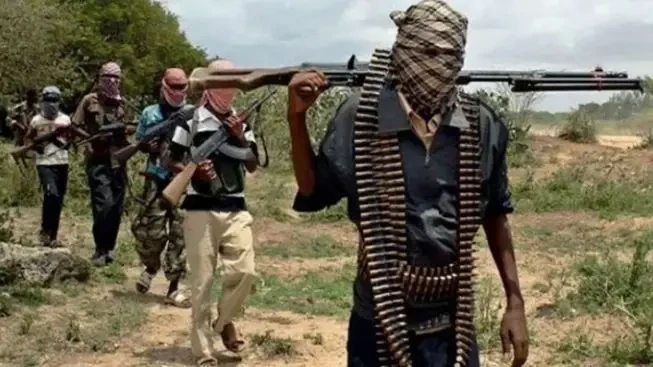
Many of the attacks occurred in northern states including Kaduna, Katsina, Zamfara and Kebbi, where armed groups targeted rural communities, travelers and residents.
One of the most notable incidents involved the abduction of 39 people in Zamfara State after they reportedly entered the Fadama Forest to negotiate peace with a suspected bandit leader known as Jimo Smally.
In Katsina State, bandits reportedly blocked the Katsina-Kankara highway and intercepted a commercial vehicle carrying 11 passengers. Police later rescued nine of the victims, while two people remained missing.
Security analyst Lekan Jackson-Ojo described the current situation as one of the most severe security crises in Nigeria’s history.
“This is the highest level of insecurity in the military and political history of the Federal Republic of Nigeria,” he said, arguing that persistent violence continues to undermine economic growth and public confidence.
Another security analyst, Chidi Omeje, said the military remains overstretched despite increased government spending.
“The military, on their own, are completely overstretched,” Omeje said, noting that security forces are deployed across numerous counterterrorism and anti-banditry operations nationwide.
He argued that military action alone would not solve the country’s security challenges and called for greater attention to poverty, governance failures, corruption and other underlying causes of instability.
Omeje also cited porous borders and insecurity across the Sahel region as contributing factors, saying instability in neighboring countries continues to affect Nigeria.
“The government seems almost clueless about how to go about this matter. They are paid to find solutions — so they must find solutions,” he said.
The figures highlight the contrast between rising government spending on security and continuing violence across large parts of the country, while much of the approved security budget remains unspent midway through the fiscal year.