






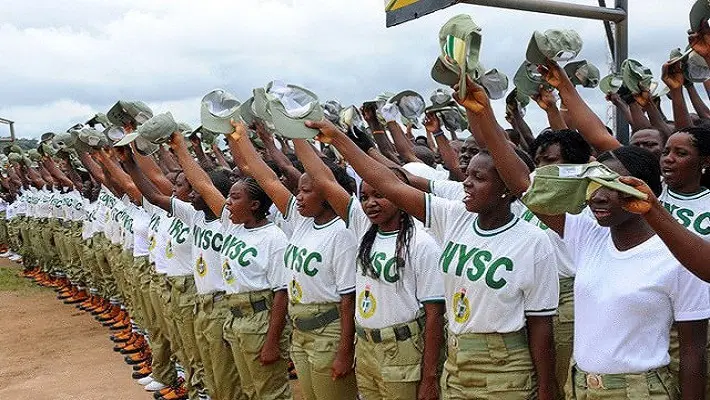
The Federal Executive Council on Monday approved sweeping reforms to the National Youth Service Corps, replacing its military leadership with a civilian director-general and restructuring the one-year program into 11 specialized, skills-based streams.
The council also approved a redesigned orientation camp program and NYSC uniform and directed the Attorney General of the Federation to begin amending the NYSC Act to provide legal backing for the reforms.
The decisions were made during a meeting chaired by President Bola Tinubu at the Presidential Villa in Abuja.
Minister of Youth Development Ayodele Olawande said the reforms followed a comprehensive review launched in 2025 to reposition the NYSC from a mobilization program into a platform for skills development, employment and economic growth.
“The NYSC was created in 1973 to promote national unity after the civil war. But today, our needs as a country have changed, and many expect the objectives of NYSC to also change,” Olawande said.
He said the review identified outdated laws, weak links between education and employment, and concerns over the safety and welfare of corps members.
Special Adviser to the President on Policy and Coordination Hadiza Bala Usman described the overhaul as the first comprehensive reform of the scheme since its establishment 53 years ago.
She said the reforms align with the administration’s goal of building a $1 trillion economy by transforming the NYSC into a civilian-led, skills-focused institution.
Under the new structure, corps members will select one of 11 streams during registration based on their academic background and skills. The streams include agriculture, medical services, education, technology and digital services, legal services, public service, infrastructure, green economy, enterprise, creative economy, and paramilitary and security.
Usman said the orientation camp would be expanded into a six-week program divided into three phases covering civic education, career development and stream-specific training.
She added that participants in specialized fields requiring longer certification, such as digital technology, would remain in structured training instead of being deployed immediately to their places of primary assignment.
The reforms also replace the NYSC’s military-led management with a civilian director-general supported by three executive directors, while a military or paramilitary officer will head the security directorate.
Usman said the military would continue to provide security for corps members, while administrative leadership would be handled by civilian professionals.
She added that the Passing-Out Parade would be renamed a graduation ceremony and that the NYSC uniform would be redesigned to reflect a more professional identity.
Responding to concerns about the migration of young professionals abroad, Usman said the reforms aim to equip corps members with marketable skills while encouraging long-term contributions to Nigeria’s economy.
Also on Monday, the Federal Executive Council approved the establishment of a National Snakebite Research and Medical Centre in Kaltungo, Gombe State.
Coordinating Minister of Health and Social Welfare Ali Pate said the center would expand the mandate of the existing snakebite treatment facility to include clinical services, research and training.
He said Nigeria records more than 43,000 snakebite cases annually, many resulting in death, disability and long-term health complications, particularly among farmers, herders and other rural residents.
The council also approved N6.9 billion for the procurement of 10 compressed natural gas-powered blood donation vehicles for the National Blood Service Agency.
Pate said the vehicles would help increase blood donations for emergency care, maternal health services, trauma patients and cancer treatment.
The council further approved N62 billion for tuberculosis commodities to reduce reliance on foreign donors and support future local production of TB medicines.
Another N25 billion was approved for reproductive health and family planning commodities to be distributed through primary health care centers nationwide.
Meanwhile, Minister of Aviation and Aerospace Development Festus Keyamo said the council approved N34.39 billion for the construction of the Gboko airstrip in Benue State.
He said the airstrip would support agricultural activities, security operations, humanitarian missions and emergency medical services in the Middle Belt.








