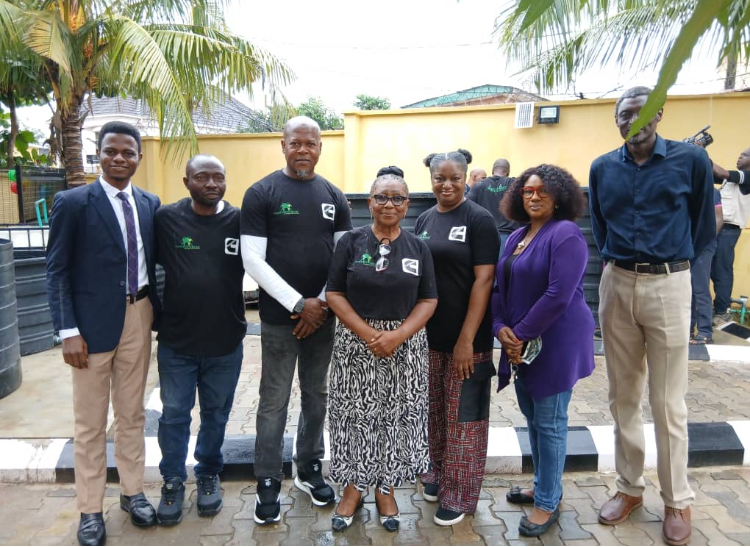
The Down Syndrome Foundation Nigeria (DSFN) in partnership with Cummins West Africa Ltd., has empowered Persons With Disabilities (PWDs), specifically persons with intellectual disabilities, with fish farming acquisition skills.
Speaking at the unveiling of the aquaculture project on Wednesday in Lagos, the President, DSFN, Mrs Rose Mordi, said the initiative aimed to equip the down syndrome students with skills to enable them earn a living.
Mordi said the objective was not only geared toward their financially independence, but also to make them entrepreneurs and employers of labour.
She explained that the training involved both the breeding of the fish and its marketing as well as how to plough back the funds to sustain the venture.
According to her, parents support are key to success of the initiative, saying that the parents must be involved to supervise and help their children.
“I think fish farming is one of the easiest and most lucrative type of venture that the students can learn from, and we want to empower them to become useful because we want to be employers of labour.
“Fish farming is quite easy and therefore, we want them to use it to earn a living; we have gone into other ventures like poultry, bakery and more.
“Presently in the country, food is number one; and everybody must eat and fish is one of the cheapest that anyone can afford to buy to be able to get protein.
“Therefore, we want to train them so that they will reach out to as many people as possible when they start their own fish farm.
“And out the 56 young adults of persons with down syndrome in the Foundation, we are presently training about 50 of them in this fish farming,” Mordi said.
Contributing, the Chairman, Board of Trustees, DSFN, Mr Akin Opeodu, described the achievement as an “impactful initiative, capable of integrating persons with down syndrome into the society.
Opeodu said the project would add more values in the lives of the students as it would certainly empower them to acquire skills, be able to earn a living and get some level of independence.
“Persons with down syndrome can actually thrive in some business ventures.
“All over the world, we have videos of people with down syndrome who run restaurants, barbing salons; recently, I even read of one who is a university professor.
“They might be slow in acquiring the skills necessary, but once you teach them, it can be self-sustaining and that is why we have the teachers and professionals to teach them,” he said.
The Consultant for DSFN Aquaculture Project, Mr Baker Azeez, said that fishery facility could actually grow about 3,500 species of fish, saying that a total of 2,500 were being bred presently.
Azeez, also a staff of Cummins West Africa Ltd., said there were a lineup of other processing methods, like killing and smoking of fishes that the students and staff of the foundation could be trained on going forward.
“From my interactions with them, I discovered that they learn more practically than one teaching them in the class.
“They can do so many things with their hands. This is hands-on and it’s exactly what is good for them.
“From inception, they have been learning and involved in all the processes – stocking, changing of water, sorting and feeding of the fish; and they have been doing them so fantastic,” Azeez said.