Nigeria’s electoral body told lawmakers Thursday it will need 873.78 billion to conduct the country’s 2027 general elections, a sharp increase from the funding released for the 2023 polls.
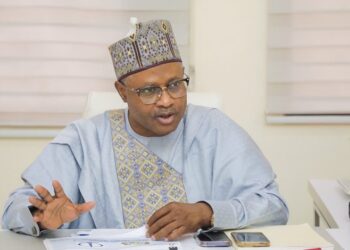
The chairman of the Independent National Electoral Commission, Joash Amupitan , disclosed the proposal while presenting the commission’s 2026 budget and 2027 election cost projections to the National Assembly of Nigeria Joint Committee on Electoral Matters in Abuja.
Amupitan said the commission also requested 171 billion naira to fund its operations for the 2026 fiscal year, including by-elections and off-cycle polls. Nigeria is scheduled to hold general elections in 2027, while governorship elections in Ekiti and Osun states, as well as polls in the Federal Capital Territory and other by-elections, are expected this year.
The proposed election budget marks a significant increase from the 313.4 billion naira released by the federal government for the 2023 general election.
Amupitan said the 2027 election budget is divided into five major components: 379.75 billion naira for operational costs, 92.32 billion naira for administrative costs, 209.21 billion naira for technology, 154.91 billion naira for capital expenses and 42.61 billion naira for miscellaneous items.
He said the proposal complies with provisions of the Electoral Act requiring the commission to prepare its election budget at least one year before a general election.
Amupitan added that the projection does not include a fresh request from the National Youth Service Corps seeking higher allowances for corps members who serve as ad hoc election staff.
For the 2026 fiscal year, he said the Ministry of Finance provided a budget envelope of 140 billion naira, but INEC proposed total spending of 171 billion naira. The breakdown includes 109 billion naira for personnel costs, 18.7 billion naira for overhead expenses, 42.63 billion naira for election-related activities and 1.4 billion naira for capital projects.
Amupitan criticized the government’s envelope budgeting system, saying it does not allow the flexibility required for election planning. He also cited the absence of a dedicated communications network as a major operational challenge, adding that developing such infrastructure would improve accountability and reduce technical disruptions.
Lawmakers at the session expressed support for the commission’s funding request.
Sen. Adams Oshiomhole argued that external agencies should not determine the commission’s budget framework, given its sensitive role. He urged lawmakers to consider INEC’s financial proposal to prevent underfunding.
Similarly, Rep. Billy Osawaru called for INEC’s budget to be placed on first-line charge as provided by the constitution, allowing funds to be released fully and on time.
The joint committee later approved a motion recommending a one-time release of the commission’s annual budget and said it would consider the NYSC’s request for about 32 billion naira to increase allowances for corps members to 125,000 naira when deployed for election duties.
Sen. Simon Lalong , chairman of the Senate Committee on INEC, said lawmakers would work closely with the commission to ensure adequate support for the 2027 elections.
Rep. Bayo Balogun, chairman of the House Committee on Electoral Matters, also pledged legislative backing but cautioned the commission against making commitments it may not be able to fulfill.
Balogun referenced the 2023 general election, noting that assurances about uploading results to the INEC Result Viewing portal created expectations of real-time monitoring that were not fully met.