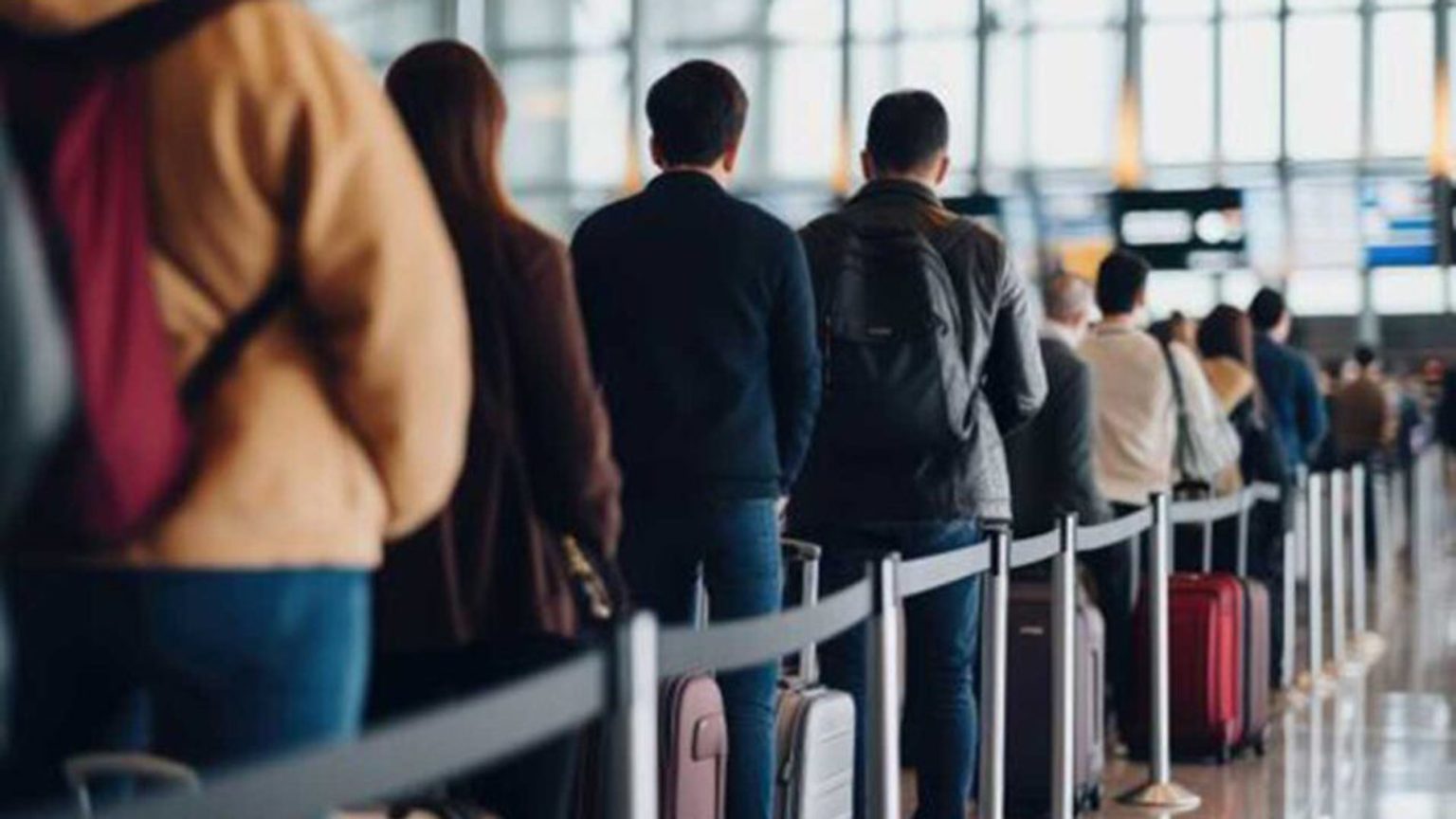
The ongoing conflict involving the United States, Israel and Iran is disrupting global air travel, with average airfares surging by more than 100% on several international routes.
Airlines across Europe and North America have raised fares following the indefinite suspension of multiple flights into and out of the Middle East, as safety concerns force carriers to halt operations. The crisis has disrupted global travel plans, including peak summer bookings, and is affecting the movement of critical goods such as temperature-sensitive medicines.
Major Middle Eastern carriers — Emirates, Etihad Airways and Middle East Airlines — have suspended flights indefinitely. Key aviation hubs, including Dubai, Abu Dhabi, Doha and Tel Aviv, are experiencing shutdowns or operating under severe restrictions, leading to thousands of flight cancellations.
The disruption has significantly affected Nigerian travelers, many of whom rely on Middle Eastern hubs for connections to Europe, the Americas and Asia. Travel agents estimate that 40% to 45% of international passengers from Nigeria transit through the region. As a result, cancellations and postponements have increased sharply in recent weeks.
Four Middle Eastern airlines — Emirates, Etihad Airways, Qatar Airways and Middle East Airlines — operate routes from Lagos and Abuja, offering a combined 47 weekly flights and more than 17,000 seats. Most of these services are now suspended or reduced.
Other global carriers, including British Airways, Lufthansa, Air France and KLM, have also halted flights to several Middle Eastern destinations.
Airfare increases have been steep. A round-trip economy ticket on British Airways for March 20 to April 1 rose to $2,656, up from about $1,050 before the conflict. Lufthansa fares for similar routes climbed to about $1,100, compared with roughly $600 in February.
Travel industry executives say the crisis is forcing airlines to take longer routes, increasing operating costs and driving up ticket prices.
Bankole Bernard, managing director of Finchglow Holdings, said the conflict highlights the interconnected nature of global aviation, noting that many Nigerian flights rely on Middle Eastern or Asian transit hubs. He added that travelers are now shifting to European and African carriers, though those alternatives often have limited capacity.
Yinka Folami, president of the National Association of Nigerian Travel Agencies, said up to 40% of Nigeria’s international travel market could be affected. He noted that cancellations, refunds and reduced bookings are already shrinking the sector.
Analysts say the conflict is also disrupting global trade. Charles Amokwu, an industry analyst, said tensions affecting the Strait of Hormuz and the Suez Canal have created a “dual chokepoint” crisis, forcing ships to reroute around southern Africa. The detours add up to 19 days to voyages and significantly increase costs.
Shipping expenses have risen by an estimated $2 billion to $3 billion weekly, while container freight rates have jumped as much as 500% on some routes.
In Nigeria, higher oil prices linked to the conflict are boosting government revenues, but households are facing rising living costs due to increased import expenses.
Pharmaceutical companies are also scrambling to maintain supply chains. Some are rerouting shipments through Saudi Arabia, Turkey and Oman, while relying on overland transport to deliver medicines that require strict temperature control.
Emirates said it has suspended all flights to and from Dubai until further notice following recent strikes. The airline advised passengers not to travel to the airport and said it is working with authorities to determine when operations can safely resume.
Industry officials warn that while major shortages have not yet emerged, prolonged disruption could threaten supplies in the Gulf, which relies heavily on imports.