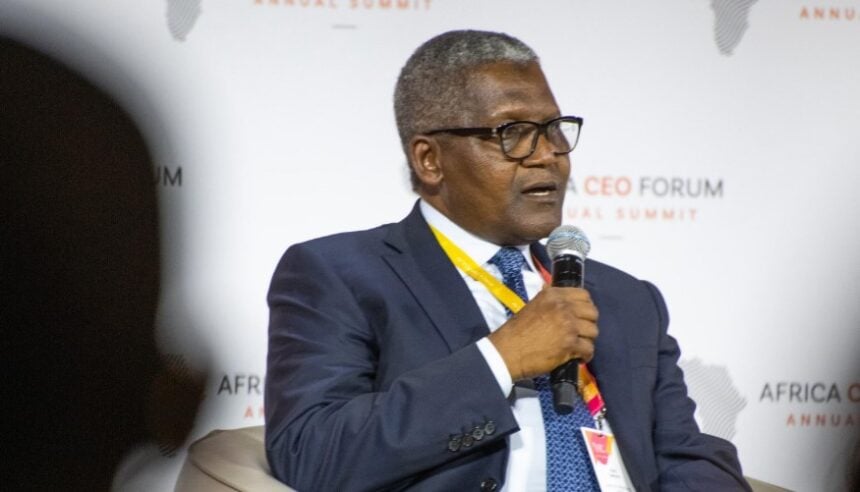
Chairman and CEO of Dangote Group, Aliko Dangote, has warned that the ongoing Middle East crisis could force Nigeria and other African countries to adopt COVID-era work-from-home measures if the conflict does not ease.
Dangote made the remarks Monday after meeting with President Bola Tinubu at his Ikoyi residence in Lagos, expressing concern over the economic impact of oil price volatility on Africa, which he said is already burdened by debt.
“If this thing doesn’t de-escalate, you know, normally we in Africa don’t have any reserves in terms of savings. People normally go out and look for money for the next day or even the same day. If they don’t work that day, they won’t eat,” Dangote said.
He cited Indonesia’s response to energy crisis pressures, where authorities have reduced workweeks to four days and are considering full work-from-home arrangements. “We will do like that time of COVID, where people will work from home,” he said.
Dangote said the crisis would disproportionately affect ordinary Africans running small businesses, including barbers, bread sellers, and industries dependent on generators for power. “People who are barbers, people who make bread, people who have industries, who have to pay for their own generators… you can see what is happening,” he said.
He called for urgent prayers and international intervention to end the conflict. “We just need all hands-on deck to pray that this thing comes to an end,” he said.
Dangote also commented on President Tinubu’s recent state visit to the United Kingdom, expressing optimism that it would create opportunities for Nigerian businesses and investment. He highlighted a £746 million infrastructure agreement signed during the visit, describing it as significant beyond the monetary value.
“It has not been easy dealing with the British, getting this kind of money out of them. They too are struggling on their own. But I think this is to show confidence — it’s not about the money. It’s about the confidence in Nigeria,” Dangote said, predicting the agreement could encourage other countries to follow suit.
He noted that Nigerian investors can now access the UK Export Finance agency, a credit resource previously underutilized, and said private investors will explore the opportunity for support.
The infrastructure agreement focuses on port development and other critical areas, with funding from UK Export Finance.
The Middle East crisis has raised concerns about global oil price volatility, which could affect inflation, transportation costs, and energy-dependent sectors across Africa. Despite being an oil-producing nation, Nigeria remains vulnerable due to its dependence on imported refined petroleum products.