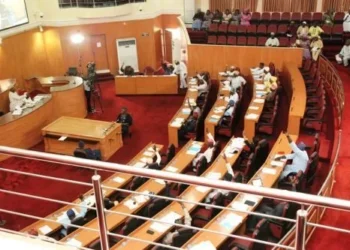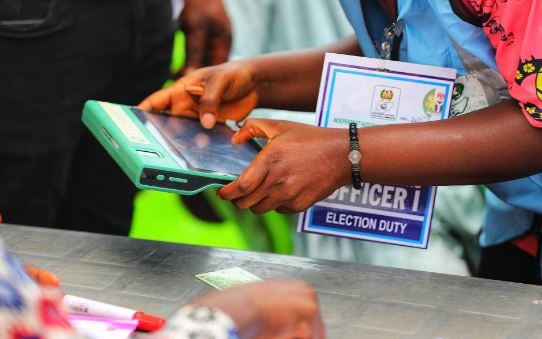
Nigeria’s Senate on Tuesday approved the electronic transmission of election results to the Independent National Electoral Commission’s Result Viewing Portal, known as IReV, while allowing manual collation as a backup in cases of technological failure.
The decision followed an emergency reconsideration of a disputed clause in the Electoral Act (Repeal and Re-enactment) Amendment Bill, 2026, after days of public criticism, protests and opposition from civil society groups and political figures.
Under the revised provision, presiding officers are required to electronically transmit results from each polling unit to the IReV portal after Form EC8A has been signed and stamped. However, if electronic transmission fails because of network or communication challenges, the manually completed Form EC8A will serve as the primary basis for collation and declaration of results.
The Senate stopped short of making electronic transmission mandatory in all circumstances and rejected calls to explicitly require real-time upload of results — a key demand of protesters who argue that manual collation could weaken transparency ahead of the 2027 general elections.
Senate President Godswill Akpabio said the motion before the chamber sought to rescind an earlier decision on Section 60(3) of the Electoral Act that had sparked public backlash.
“That the presiding officer shall electronically transmit the results from each polling unit to the IReV portal,” Akpabio read from the amended clause, adding that the law provides for manual collation where electronic transmission becomes impossible.
The emergency session followed tense exchanges in the chamber after Senate Chief Whip Tahir Monguno moved to rescind the earlier approval of Clause 60(3). The motion was seconded by Sen. Abdul Ningi.
Sen. Enyinnaya Abaribe objected to the removal of the phrase “real-time” from the clause, and at one point invoked Senate rules to call for a formal division as lawmakers shouted across the aisle.
The Senate also appointed a 12-member conference committee, chaired by Sen. Simon Lalong, to harmonize differences between its version of the bill and that passed by the House of Representatives. Akpabio said the harmonized bill would be transmitted to President Bola Tinubu for assent before the end of February.
Supporters of the Senate’s position described it as a compromise. Sen. Orji Uzor Kalu said electronic transmission would be the primary method where technology is functional, while manual collation would apply only when transmission fails.
Opposition figures and civil society groups, however, criticized the inclusion of the manual fallback clause.
Former Vice President Atiku Abubakar said a mixture of electronic and manual transmission could create confusion and urged opposition parties to push for a single-tier, real-time electronic system.
Former Rivers State Gov. Rotimi Amaechi joined protesters at the National Assembly complex, calling for mandatory real-time transmission and arguing it could reduce election-related violence.
Former Kaduna State Gov. Nasir El-Rufai said he would have joined the protests if he had been in the country, describing real-time transmission as critical to preventing manipulation.
The Peoples Democratic Party said allowing manual transmission where technology is deemed to have failed could serve as a “backdoor” to undermine reforms. The New Nigeria People’s Party also warned that the clause creates room for abuse, particularly in areas with poor network coverage.
Some groups, including the African Democratic Congress, described the Senate’s reversal of earlier provisions as a victory for civic pressure but urged continued vigilance through the harmonization process.
Civil society organizations said they would focus on engaging the conference committee to push for mandatory real-time electronic transmission.
As debate continues, attention has shifted to the conference committee’s final recommendations and whether the president will assent to the amended bill.