






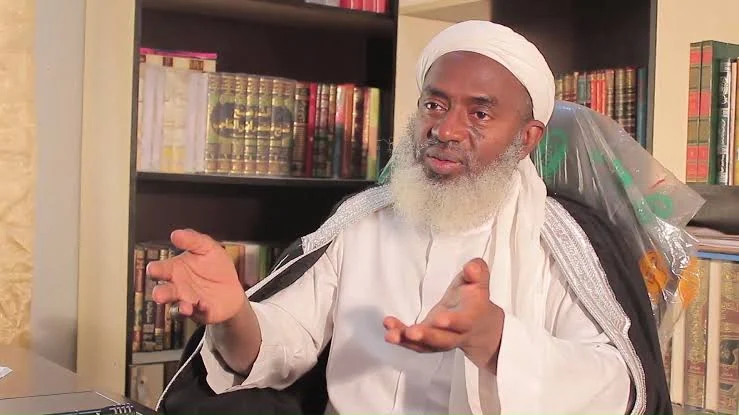
Islamic cleric Sheikh Ahmad Gumi has defended his visit to Ibadan last year following criticism and allegations that he was promoting the Islamization of Oyo State.
In a Facebook post on Tuesday, Gumi said no one could prevent him from traveling to any part of Nigeria and rejected claims that his visit was at the invitation of Muslim groups or individuals in the South-West.
“I was in Ibadan, not by the invitation of any South-West Muslim individual or group, but as a representative of the Coalition of Northern Muslim Ulama,” Gumi wrote. “Can anybody stop me from going anywhere in Nigeria?”
The cleric said he believed anti-Muslim sentiment was influencing political discourse in the South-West and contributing to criticism of his visit.
“I quite understand now how Islamophobia is shaping politics in the South-West and why I was unnecessarily dragged into their dirty local politics,” he added.
Gumi’s comments came a day after one of the victims abducted in Oriire Local Government Area of Oyo State rejected reports that the kidnappers had demanded the introduction of Sharia law in the state as a condition for releasing their captives.
In a video recorded while in captivity and widely circulated online, the principal of Community High School, Esiele, Mrs. Rachael Alamu, said the abductors did not request the implementation of Sharia law or a ransom of N1 billion, as had been reported in some quarters.
According to Alamu, the kidnappers instead demanded the release of some of their associates being held by Nigerian authorities.
The Muslim Rights Concern (MURIC) also dismissed the reports in a statement issued Monday, describing claims that the kidnappers demanded Sharia law as false.
The group alleged that opponents of Islam inserted the claim into negotiations to damage the religion’s image.
Gumi echoed the position taken by MURIC, arguing that his visit to Ibadan had been misrepresented.
The cleric visited Ibadan on Nov. 19, 2025, as a special guest and speaker at the Southern Nigerian Ulama Summit held at the University of Ibadan. During the visit, he also participated in a courtesy meeting alongside prominent Muslim scholars from northern and southern Nigeria.








