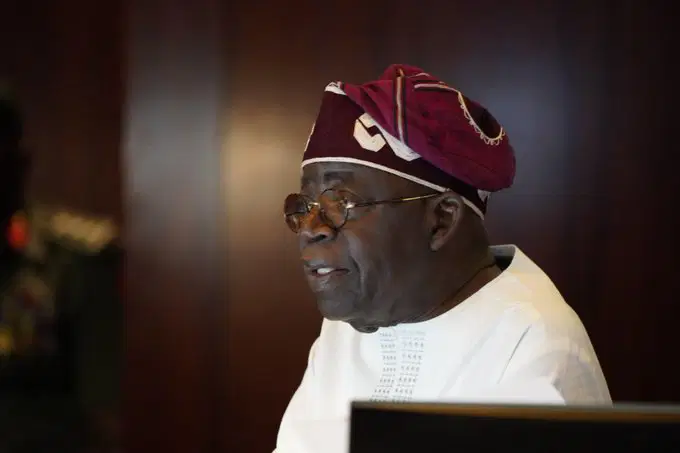
The federal, state, and local governments could receive an estimated N14.57 trillion in additional revenue following a recent executive order signed by President Bola Tinubu directing that royalty oil, tax oil, profit oil, profit gas, and other revenues due to the Federation under production sharing, profit sharing, and risk service contracts be paid directly into the Federation Account.
The projection is based on an analysis of 2025 revenue inflows submitted to the Federation Account Allocation Committee, obtained by our correspondent in Abuja on Thursday.
Under the order, the Nigerian National Petroleum Company (NNPC) is expected to remit about N906.91 billion in management fees and Frontier Exploration Fund contributions. Oil and gas royalties totaling N7.55 trillion and gas flaring penalties of N611.42 billion collected by the Nigerian Upstream Petroleum Regulatory Commission will also be remitted directly to the Federation Account. In addition, the Nigeria Revenue Service will no longer collect Petroleum Profits Tax and Hydrocarbon Tax, which generated N4.905 trillion in 2025, while the Midstream and Downstream Gas Infrastructure Fund recorded N596.61 billion in the same period.
The executive order, which took effect Feb. 13, 2026, also scrapped the 30% Frontier Exploration Fund under the Petroleum Industry Act and ended the 30% management fee on profit oil and profit gas retained by NNPC. President Tinubu said the directive aims to safeguard oil and gas revenues and improve remittances into the Federation Account.
The President cited Sections 5 and 44(3) of the Constitution, which vest ownership and control of all minerals, mineral oils, and natural gas in the federal government, as the legal basis for the directive.
Since the implementation of the PIA in 2021, the Federation Account received only 40% of proceeds from Production Sharing Contracts, with the remaining 60% retained by NNPC. Under the new directive, the NNPC will no longer collect the Frontier Exploration Fund or management fees, significantly altering revenue flows.
The Frontier Exploration Fund, previously designed to finance exploration in high-risk basins outside the Niger Delta—including the Chad, Sokoto, Bida, Benue, and Dahomey basins—was intended to expand Nigeria’s reserve base and support long-term energy security.
All operators under Production Sharing Contracts must now pay royalties and other government interests directly into the Federation Account. Payments of gas flare penalties to the Midstream and Downstream Gas Infrastructure Fund are also suspended, with proceeds remitted directly to the Federation Account. Expenditure from the fund must now comply with public procurement laws.
Tinubu said in a post on X that excessive deductions and overlapping funds in the oil and gas sector have weakened remittances to the Federation Account. “When revenues meant for federal, state, and local governments are trapped in layers of charges and retention mechanisms, development suffers. That must end,” he wrote.
The reforms are part of the administration’s broader push for fiscal discipline, transparency, and equitable revenue distribution. Tinubu said NNPC will now operate strictly as a commercial enterprise, and his government will review the PIA to address structural and fiscal anomalies. An implementation committee has been approved to oversee execution of the order.
Experts have largely welcomed the directive. Professor Wumi Iledare , chair of the Oil, Gas, and Energy Policy Forum, called it a “significant fiscal intervention” aimed at improving transparency and efficiency, but cautioned that statutory frameworks under the PIA must be considered to maintain contractual stability and investor confidence.
The Capital Market Academics of Nigeria also praised the move. Its president, Prof Uche Uwaleke described the executive order as “bold and historic,” correcting a long-standing fiscal imbalance and ensuring all tiers of government benefit equitably from the nation’s oil and gas wealth. CMAN also recommended including the Revenue Mobilisation, Allocation, and Fiscal Commission chairman on the implementation committee and called for similar reforms to be extended to Joint Venture assets.
Based on 2025 figures, NNPC may lose roughly N906.91 billion in management fees and Frontier Exploration Fund deductions, while NUPRC is expected to forgo N7.55 trillion in royalties. Gas flaring penalties of N611.42 billion and other revenues totaling N4.905 trillion will also be redirected to the Federation Account. Collections from the Midstream and Downstream Gas Infrastructure Fund, totaling N596.61 billion in 2025, will now fall under public finance rules.
The changes are expected to boost subnational earnings, reduce budget deficits, and provide state and local governments with greater fiscal resources for infrastructure and social services. Experts say the reforms signal a potential new era of transparency and fiscal discipline in Nigeria’s oil and gas sector.