Fresh security concerns are mounting over the growing presence of Boko Haram factions and allied armed groups operating from the Kainji National Park axis, with military analysts warning that failure by the Federal Government to dismantle the enclave could allow jihadist attacks to spread to major South-West cities within months.
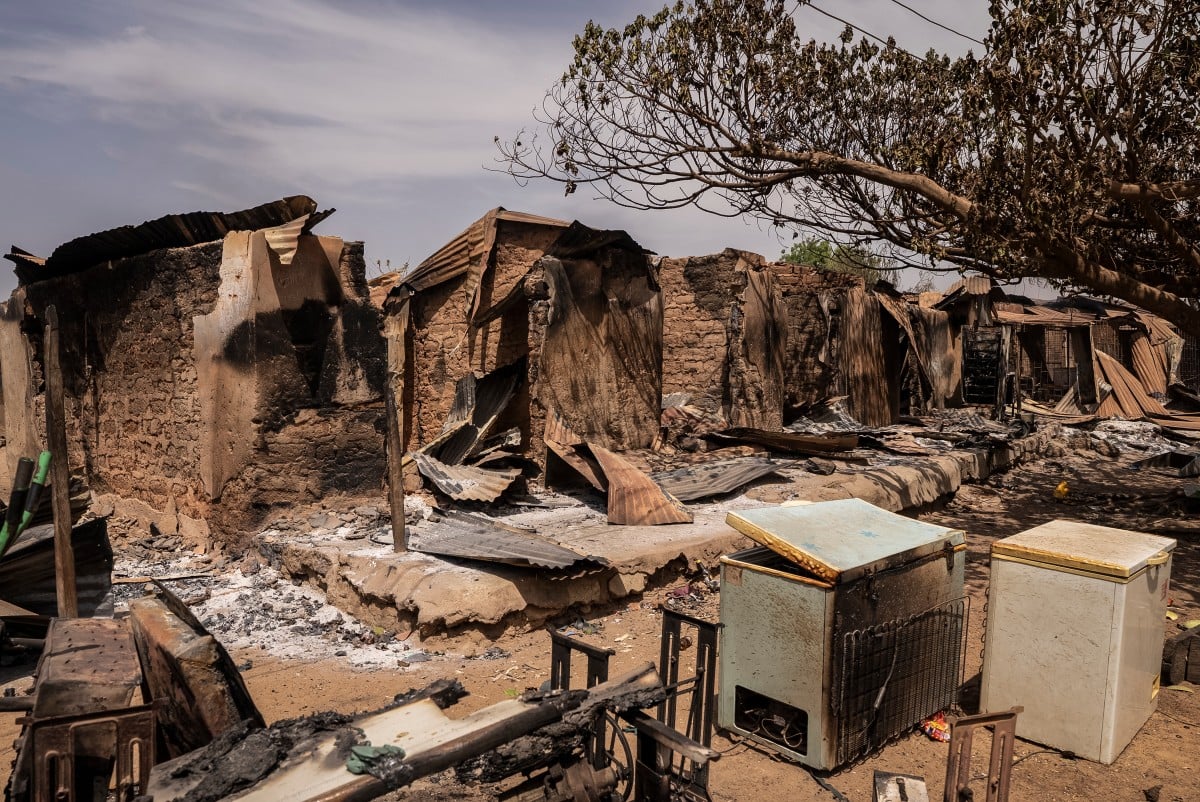
The warning follows coordinated attacks last Tuesday on Woro and neighbouring communities in Kaiama Local Government Area of Kwara State, where at least 176 residents were reportedly killed in one of the deadliest assaults in the state’s history.
The attackers struck after villagers allegedly refused to comply with militant demands, highlighting what security experts describe as an expansion of violent extremism beyond Nigeria’s traditional North-East theatre.
Analysts say the killings signal a dangerous shift in Nigeria’s terror geography, bringing insurgent activity closer to major population and economic centres.
Kainji National Park, located about 90 kilometres from Ilorin, the Kwara State capital, and less than 400 kilometres from Lagos, has evolved from a wildlife sanctuary into a hideout for jihadist groups, bandits and organised criminal networks, according to security sources.
Covering about 5,340 square kilometres across Kwara and Niger states, the park’s dense forests and rugged terrain now provide cover for insurgents displaced by military operations in the North-West and North-East, including Boko Haram factions.
Military analysts say the scale of killings attributed to insurgent commander Abubakar Saidu, also known as Sadiku, within a single week in Kwara rivals casualty figures from many Boko Haram attacks in the North-East in 2025.
They warn that without an intelligence-driven, large-scale operation across the Kwara-Kogi-Niger axis, militants could consolidate their foothold, establish sleeper cells and exploit forest corridors and weak rural surveillance to push into the South-West.
Retired Maj.-Gen. Peter Aro, a former troop commander and ex-director of information and communication technology at Army Signals Headquarters, said the crisis should not be treated as a conventional war.
“Terror groups do not move suddenly; they advance gradually,” Aro told Sunday PUNCH. “They establish sleeper cells, spy on communities, map routes, test response times and exploit weak governance before launching major attacks.”
He warned that the proximity of Woro to Ilorin should be a red flag, adding that any evidence of sleeper cells in the South-West would suggest infiltration is already underway.
Aro identified Ondo State as particularly vulnerable due to vast forests, poor rural access and weak surveillance, warning that intensified rains would make the Kainji forest even harder to penetrate.
Another retired senior officer, Maj.-Gen. Ishola Williams, former commandant of Army Signals and ex-chief of defence training and planning, criticised Nigeria’s counter-terrorism approach, saying the military had failed to adapt despite more than a decade of insurgency.
“How can small groups of 200 attackers overrun communities and kill people without resistance?” Williams asked. He also questioned accountability over reports that security agencies received warnings before some attacks but failed to act.
A retired assistant commissioner of police, Segun Onifade, said Kainji National Park exemplifies Nigeria’s failure to secure vast rural spaces. He called for permanent joint military, police and intelligence bases within and around the park, rather than periodic raids.
“Protected forests can no longer be treated as neutral ecological spaces,” Onifade said, urging the deployment of armed rangers, drones and satellite surveillance.
Security analyst Abdulyekeen Mohd Bashir said insurgents displaced from Zamfara and other North-West states regrouped in Kainji due to weak security. He said Boko Haram factions, groups linked to Jama’at Nusrat al-Islam wal-Muslimin and bandits now operate in the corridor, sometimes clashing over territory.
Another analyst, Akeem Olatunji, said the Kaiama attack exposed weaknesses in Nigeria’s early-warning and response systems.
It was also revealed that the Nigerian Air Force’s 407 Air Combat Training Group in Kainji hosts A-29 Super Tucano aircraft acquired under former President Muhammadu Buhari.
A security source said the base is about 10 minutes by air from Woro, questioning why air power was not deployed during the attack despite the proximity.
A civil society group, the Foundation for Peace Professionals, raised similar concerns. Its executive director, Abdulrazaq Hamzat, questioned why air assets were not used despite an Air Force base near Wawa and New Bussa.
He blamed worsening insecurity on weak inter-state coordination, ungoverned spaces and poor early-warning and rapid-response systems, saying the situation has emboldened armed groups.
Meanwhile, Lagos and Osun states say they have intensified security measures.
Lagos State Commissioner for Information Gbenga Omotosho said the state is relying on intelligence from the Lagos Neighbourhood Safety Corps and plans to recruit 1,500 additional operatives. He said the Rapid Response Squad has also received about 160 vehicles through the Lagos State Security Trust Fund.
In Osun State, security adviser Samuel Ojo said boundaries with Kwara had been fortified with additional troops and residents sensitised to report suspicious movements.
Kwara State Gov. AbdulRahman AbdulRazaq said senior military and police officers are in the state, confirming the deployment of troops and the launch of Operation Savannah Shield.
Attempts to obtain comments from Ogun, Ondo and Oyo state governments were unsuccessful.