






Nigerian authorities deducted about N500 billion ($325 million) from May 2026 federation revenues to fund a national security emergency intervention before the monthly allocation of funds to federal, state and local governments, according to officials familiar with the process.
The deduction was made through the Federation Account Allocation Committee (FAAC), which oversees the distribution of federally collected revenues among the three tiers of government.
One official familiar with the proceedings said the N500 billion security allocation formed part of pre-distribution adjustments approved before revenue sharing for May.
Another source said the deduction accounted for a significant portion of the difference between total revenues generated and the amount eventually distributed.
Official FAAC documents obtained by local media showed that N250 billion was allocated to a Military Intervention Fund, while another N252 billion was earmarked as an Infrastructure Development Fund for states. An additional N450 billion was transferred to the Non-Oil Excess Revenue Account, bringing the combined value of the major deductions to N952 billion.
The deductions were disclosed as FAAC announced the distribution of N2.3 trillion in May 2026 revenue to the federal government, states and the country’s 774 local government councils.
According to a statement issued by the Office of the Auditor-General of the Federation, the amount distributed represented an increase of N43 billion from the N2.26 trillion shared in April.
The statement said total distributable revenue consisted of N1.61 trillion in statutory revenue and N688.8 billion from Value Added Tax collections.
A communiqué issued after the FAAC meeting showed that total gross revenue for May stood at N3.4 trillion. From that amount, N123.5 billion was deducted as the cost of collection, while N971.6 billion was set aside for transfers and refunds.
The federal government received N818.7 billion from the distributable revenue, state governments received N759.1 billion, local government councils received N534.3 billion and oil-producing states shared N188.1 billion as derivation revenue.
Although the official communiqué did not specifically itemize the security allocation, officials said it formed part of the transfers and refunds category.
The move comes as Nigeria continues to confront multiple security challenges, including insurgency in the northeast, banditry and mass kidnappings in the northwest, communal violence in the north-central region, separatist unrest in the southeast and oil-related crimes in the Niger Delta.
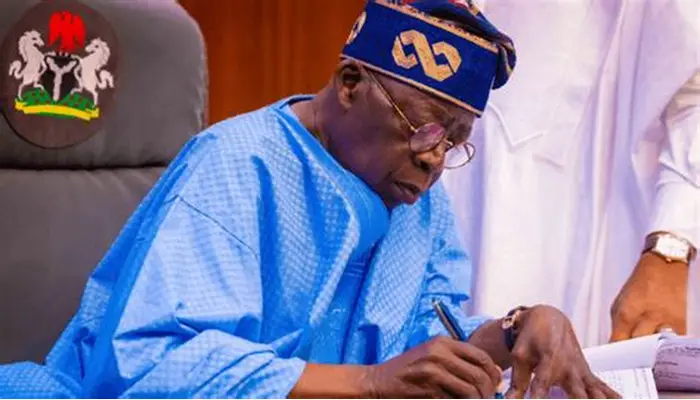
President Bola Tinubu’s administration has repeatedly identified security as a key priority, increasing defense spending, procuring military equipment and expanding intelligence-led operations since taking office in May 2023.
Economists welcomed the proposed security intervention fund but stressed the need for transparency and accountability.
Economist Ayo Teriba said additional funding for security was necessary given existing resource gaps but urged the government to clearly explain how the money would be spent.
“Everybody agrees that more needs to be done on security,” Teriba said, adding that public support would depend on transparent management of the funds.
Professor Akpan Ekpo of the University of Uyo also described security as critical to economic growth and investment, saying improved security would help create a more stable environment for development.
Meanwhile, the Department of State Services urged lawmakers to remove provisions in a proposed DSS Trust Fund bill that would allow international organizations to contribute financially to security operations.
The agency warned that foreign funding could compromise operational confidentiality, institutional independence and national sovereignty.
At a public hearing before the House of Representatives Committee on National Security and Intelligence, DSS representative Emmanuel Duabry said international funding arrangements could expose sensitive intelligence activities to external influence.
The agency instead proposed limiting donations and grants to domestic organizations while endorsing the broader objective of creating a dedicated funding mechanism for intelligence and counterterrorism operations.
Separately, the Nigeria Police Force confirmed that Deputy Inspectors-General of Police recently assigned to the country’s six geopolitical zones have resumed duties in their respective areas as part of efforts to strengthen security coordination and intelligence-led policing nationwide.








