






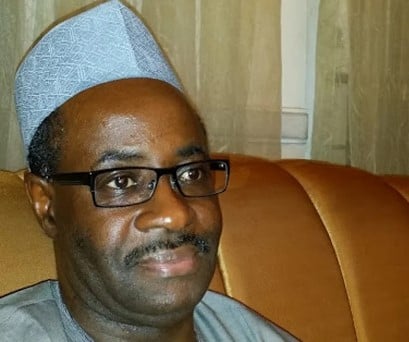
Nigeria’s federal government will no longer shoulder electricity subsidy costs alone, moving from 2026 to a framework that spreads the burden across federal, state and local governments, officials said Monday.
The Director-General of the Budget Office of the Federation, Tanimu Yakubu, said President Bola Tinubu had directed that power subsidies be made explicit, tracked and fairly shared, warning that the current system creates hidden liabilities and recurring crises in the electricity market.
“If we want a stable power sector, we must pay for the choices we make,” Yakubu said at a training workshop in Abuja on the 2026 post-budget preparation process for ministries, departments and agencies. “When tariffs are held below cost, a gap is created. That gap is a subsidy. And a subsidy is a bill.”
Yakubu said that from 2026, the federal government would end the practice of treating electricity subsidies as an open-ended obligation borne solely by the centre, particularly where policy decisions and political benefits are shared across tiers of government.
“In 2026, we will stop pretending that this bill can be left to the Federal Government alone,” he said.
He said the president had directed that existing electricity sector laws be applied to ensure subsidy sharing is transparent, practical and enforceable, adding that funding responsibilities must be clear whenever any level of government chooses to intervene on affordability.
“This is not punishment. It is alignment,” Yakubu said. “When everyone carries a fair share of the cost, everyone also has an incentive to support efficiency, targeted protection for the vulnerable and a power market that can deliver.”
Yakubu directed MDAs to reflect subsidy-related costs clearly in their 2026 budget submissions and avoid pushing unfunded liabilities into the power market.
Beyond electricity subsidies, Yakubu said the 2026 Budget would mark a shift away from rollover budgeting and fragmented project lists toward a single implementation framework designed to improve execution and accountability.
He described the approach as a “single-train” framework aimed at consolidating government commitments into a visible pipeline and reducing duplication.
“One plan. One pipeline. One execution logic,” he said.
Yakubu also said Tinubu had ordered a review of Nigeria’s fiscal responsibility framework to strengthen enforcement, introduce clearer fiscal anchors and improve reporting on contingent liabilities.
“For MDAs, you will not only be asked what you want to spend,” he said. “You will be asked how it fits the fiscal rules, how it affects sustainability and what results it will deliver.”
He added that the 2026 Budget would further shift from long project lists to delivery-ready and finance-ready projects, arguing that fewer, well-funded projects would have greater impact.
“A long list of projects is not a development strategy,” Yakubu said.
Yakubu described the Government Integrated Financial Management Information System Budget Preparation Sub-System as central to restoring budget credibility by improving transparency and traceability from submission to execution.
Nigeria’s electricity subsidy bill has remained a major fiscal burden. The Federal Government incurred about 1.98 trillion naira ($1.3 billion) in electricity subsidy obligations between October 2024 and September 2025, according to quarterly reports by the Nigerian Electricity Regulatory Commission, amid efforts to settle more than 4 trillion naira in debts owed to power generation companies.








