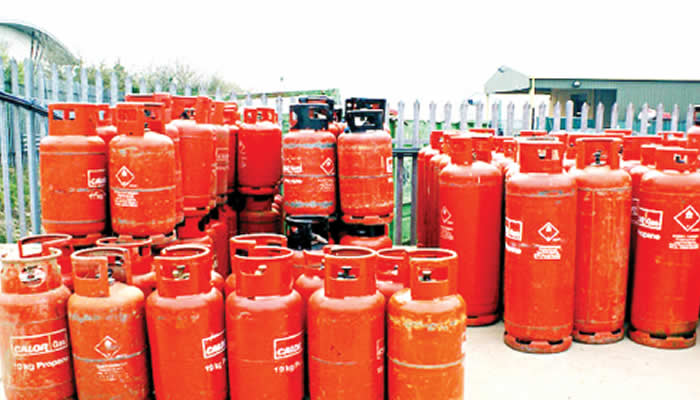
The price of liquefied petroleum gas (cooking gas) continues to rise across Nigeria despite increased domestic production and reduced imports, according to data from the Nigerian Midstream and Downstream Petroleum Regulatory Authority.
The data showed that local production from refineries and gas processing plants accounted for most of Nigeria’s LPG supply between April 2025 and April 2026, reducing reliance on imports. However, the increased supply has not translated into lower retail prices.
Prices have risen to as high as N2,000 per kilogram in some parts of the country, up from less than N1,000 in many areas months earlier.
NMDPRA data showed average daily domestic LPG supply ranged between 3,300 and 4,500 tonnes during the period under review. By March and April 2026, local production stood at 4,500 tonnes per day, accounting for the bulk of national supply.
Imported volumes declined sharply, falling to 200 tonnes per day in March 2026 from 1,600 tonnes per day in November 2025 and 1,500 tonnes per day in December 2025.
Total daily supply ranged between 4,200 and 5,200 tonnes, peaking in December 2025 before dropping to 4,500 tonnes by April 2026.
Officials said improved output from gas processing facilities and rising refining capacity, including contributions linked to the Dangote Petroleum Refinery, helped boost domestic supply.
Despite this, consumers continue to face high prices and occasional shortages. Marketers attributed the trend to supply chain disruptions and uneven distribution, saying product availability remains inconsistent in some areas.
The rising cost has pushed some households to switch to charcoal and firewood, raising concerns about environmental impacts and setbacks to clean energy adoption.
Data from the Nigerian Gas Infrastructure Company showed several major gas projects nearing completion, including the Ajaokuta–Kaduna–Kano pipeline at 93.4%, the OB3 River Niger Crossing at 93.88% and the ELPS Midline Compressor Project at 94.45%.
The Odidi–Warri Expansion Project is 70.28% complete, while the Escravos–Odidi project stands at 17.49%.
The NGIC described the major projects as nearing completion, saying they are expected to significantly improve gas transportation and supply nationwide once operational.
The Nigerian Association of Liquefied Petroleum Gas Marketers warned that rising costs and erratic supply could worsen hardship for households and small businesses.
The association said marketers now pay between N25.2 million and N26.2 million for 20 metric tonnes of LPG, describing the situation as “sad and very pathetic.”
“The citizens of Nigeria have woken up to buy cooking gas, which should be a social item, at a prohibitive cost,” the association said.
It warned that continued price increases could trigger public frustration if not addressed, adding that the situation is undermining efforts to expand clean cooking energy access.
Stakeholders said resolving distribution bottlenecks and market inefficiencies would be key to ensuring that increased domestic production translates into lower prices for consumers.