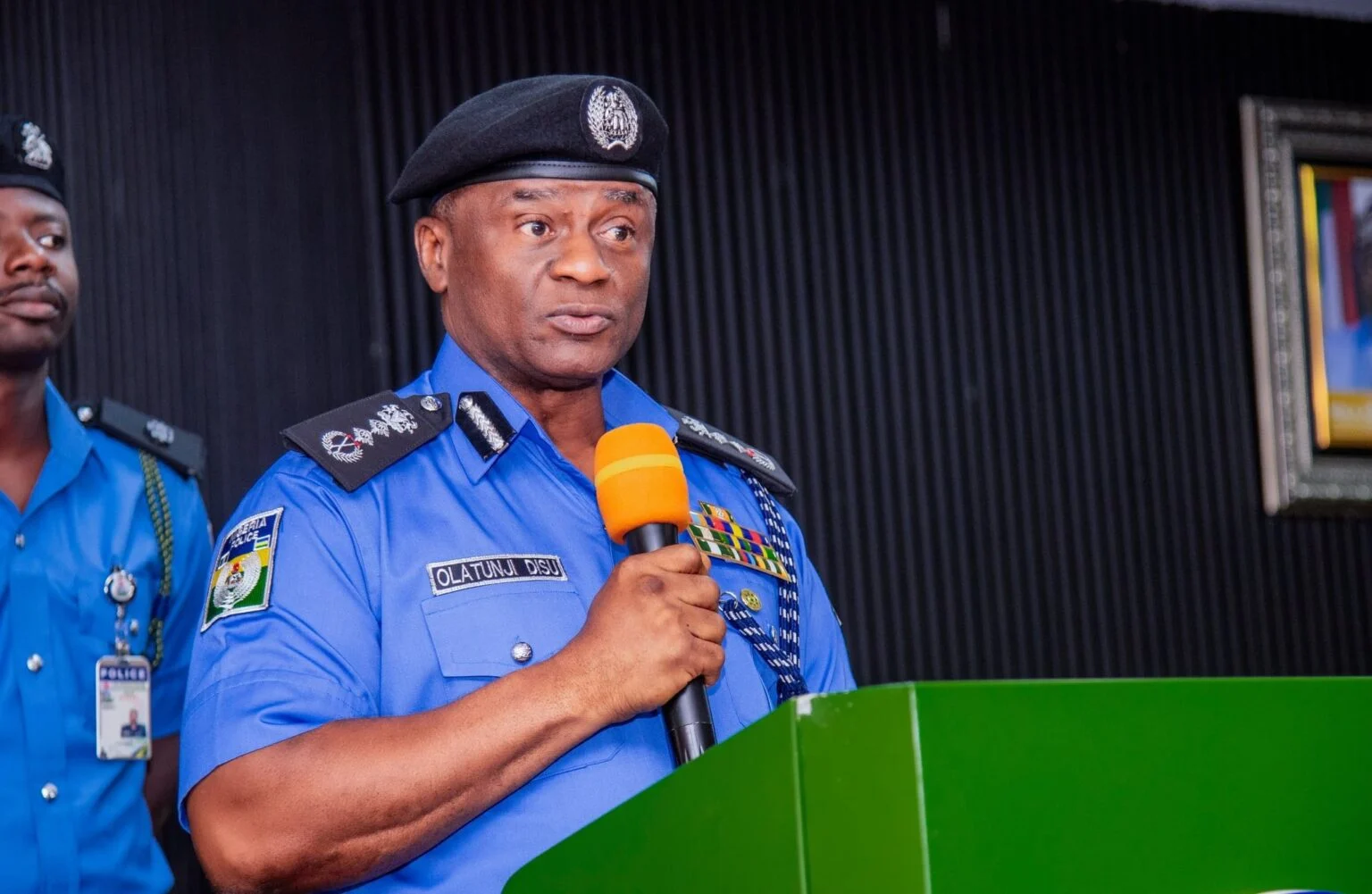
Newly sworn-in Inspector-General of Police Tunji Disu on Wednesday inaugurated a committee to examine the establishment of state police as debate over policing reforms intensifies.
President Bola Tinubu last week urged the leadership of the 10th Senate to initiate constitutional amendments to allow for state police. Speaking during a Ramadan fast-breaking with senators at the Presidential Villa in Abuja, Tinubu said decentralized policing would strengthen grassroots security and improve rapid response to threats, noting that the current centralized structure requires constitutional review.
At the inauguration, Disu said the committee would evaluate the concept of state policing as part of efforts to strengthen Nigeria’s internal security architecture and enhance community-based policing.
He said the panel would review policing models within and outside Nigeria, assess community security needs, propose an operational framework for state police structures, and address recruitment, training, funding, standards, accountability and oversight.
“State police formation could provide localized policing services focused on community safety, conflict prevention, neighborhood patrols and early response to emerging threats,” Disu said, describing the move as a collaborative arrangement aimed at strengthening professionalism and delivering improved security outcomes.
The steering committee is chaired by Olu Ogunsakin, director-general of the National Institute for Police Studies, Abuja, with Bode Ojajuni serving as secretary. Other members include senior police officers and a retired commissioner of police.
Disu, who was sworn in earlier Wednesday, said he constituted the committee to develop the Nigeria Police Force position on state police.
“We don’t want it to seem as if others are taking decisions and we, the most important people concerned, did not do anything,” he said, adding that the police were not opposed to state policing and viewed it as a partnership rather than a threat.
“State police has come to stay. The police are not afraid. Our jobs are not being taken. It’s an issue of partnership,” he said.
Disu took the oath of office at 2:53 p.m. following the reading of his citation by State House officials. The ceremony was attended by Vice President Kashim Shettima , Secretary to the Government of the Federation George Akume, National Security Adviser Nuhu Ribadu, Chief of Staff Femi Gbajabiamila, Minister of Police Affairs Ibrahim Gaidam and Federal Capital Territory Minister Nyesom Wike, among others.
Tinubu had appointed Disu acting inspector-general following the resignation of Kayode Egbetokun on Feb. 23, 2026.
A retired assistant inspector-general of police, Ali Amodu, described the formation of the committee as a step in the right direction, saying it would provide professional input to the presidency on decentralizing the police force.
Former Commissioner of Police Lawrence Alobi also backed the move, urging the committee to clearly define the structure and supervisory framework for state police formations and address jurisdictional issues to prevent operational conflicts.
Nigeria’s constitution currently provides for a single national police force, and lawmakers have indicated that amendments would be required to establish state police.
Meanwhile, Disu said the police were closely monitoring Islamic groups with allegiance to Middle Eastern countries amid escalating tensions involving the United States, Israel and Iran.
“Our ears are to the ground,” he said. “We know that if anything happens in that part of the world, the repercussions could come to us.”
The comments follow recent U.S. and Israeli airstrikes on Iranian targets and retaliatory missile attacks, developments that have heightened global security concerns.