A wave of attacks by suspected insurgents in Nigeria’s northeast has left soldiers dead and prompted renewed calls for a “wartime approach” to the country’s worsening security crisis, officials and regional groups said Wednesday.
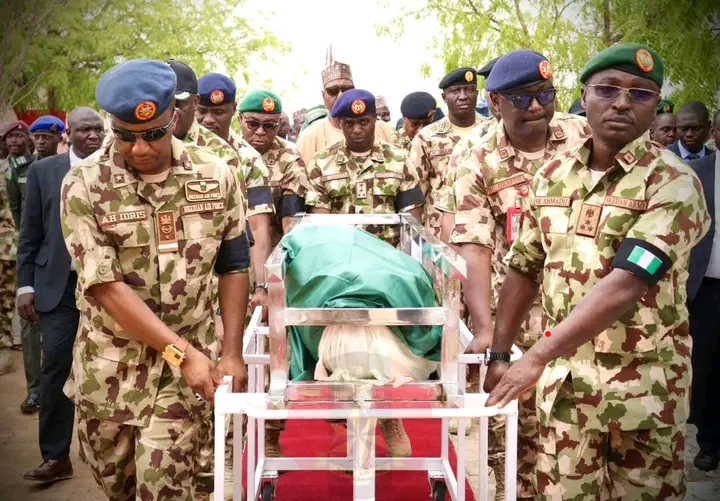
The Nigerian Army said it buried the remains of Brig. Gen. Oseni Braimah, Capt. Ismail and other soldiers killed in recent attacks blamed on Boko Haram and the Islamic State West Africa Province in Borno State.
The army said the troops were killed in coordinated assaults on military positions in Benisheikh, along the Maiduguri-Damaturu highway on April 9.
A separate attack in Askira Uba Local Government Area left four additional soldiers dead, military sources said. The troops came under fire around noon Wednesday in a gun battle that lasted nearly an hour.
“They were taken unawares, but the troops stood their ground,” a military source said.
In Monguno, troops reportedly set fire to houses in the Charlie 2 community following a deadly ambush on a military base that killed a commanding officer and six soldiers earlier this week. Military authorities later halted the operation for review and possible dialogue with community leaders.
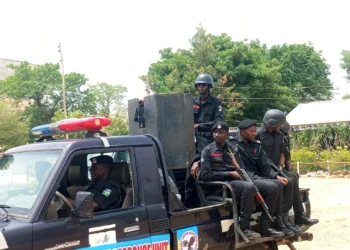
In Benue State, police launched clearance operations targeting criminal groups, warning against cattle rustling and collaboration with armed gangs. Commissioner of Police Ifeanyi Emenari said those found aiding criminals would face prosecution.
Amid the escalating violence, the Arewa Consultative Forum and the Afenifere urged the federal government to adopt stronger measures to address insecurity, warning that the country faces an existential threat.
The Arewa Consultative Forum said Nigeria’s security situation has “evolved into a state of all-out war,” calling for a shift in national priorities and increased funding for security operations.
“It has become an existential threat,” the forum said in a communiqué issued after a meeting of its board of trustees in Abuja.
The group said insecurity across the northeast, northwest and north-central regions has devastated communities, displaced residents and disrupted agriculture and economic activity.
It called for what it described as a wartime approach, including the temporary suspension of nonessential projects to focus resources on security.
The forum also warned communities against aiding armed groups, saying such actions expose residents to prosecution and undermine national security efforts.
Afenifere, meeting in Akure, expressed concern over rising violence in the southwest and urged state governments to strengthen regional security networks, including the Amotekun Corps.
The group also renewed its call for restructuring and improved coordination among states to combat insecurity.
In a related development, a U.S. lawmaker, Kimberly Daniels, called for the removal or redeployment of Minister of State for Defence Bello Matawalle, citing allegations of complicity in insecurity. She urged international pressure and investigations into claims of support for armed groups.
Nigeria’s worsening security situation was further highlighted in a March 2026 report by the Legislative Centre for Security Analysis at the National Institute for Legislative and Democratic Studies, which recorded 345 deaths and 361 kidnappings across 36 incidents.
The report said terrorism accounted for 72% of fatalities and warned that attacks on military formations were increasing in scale and sophistication.
It identified Borno and Plateau states as major hotspots and cautioned that violence could intensify ahead of upcoming elections.
Meanwhile, youth leaders in Benue State said residents are prepared to join peaceful protests over continued killings of farmers, warning that insecurity is threatening the state’s agricultural livelihood.