






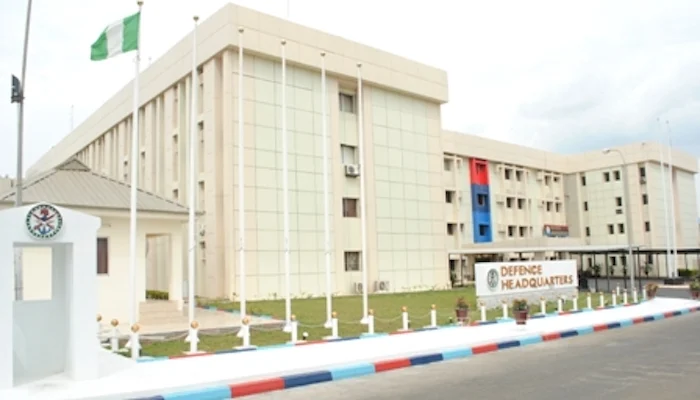
Nigeria’s Defence Headquarters said on Friday that military support from the United States does not threaten the country’s sovereignty and comes at no cost to the federal government.
The military said the assistance focuses on training Nigerian troops and strengthening counterterrorism operations.
The Defence Headquarters confirmed that about 100 U.S. military personnel and equipment arrived in Nigeria on Feb. 17 following discussions between Nigerian and U.S. officials.
Maj. Gen. Micheal Onoja, director of defence media operations, told reporters in Abuja that the collaboration is routine and should not raise concern.
“The American government is interested in combating terrorism, and the assistance being rendered to Nigeria comes at no cost,” Onoja said. “Our sovereignty is intact. Our territorial integrity is intact. Nobody is giving away our sovereignty.”
He urged the public to focus on the benefits of the partnership rather than the number of foreign personnel involved, adding that the cooperation has already produced positive results in recent weeks.
Onoja said U.S. personnel are mainly engaged in training programs, comparing the effort to Nigerian officers attending training abroad.
“There is no basis for concern. We go for training abroad all the time. This is simply a training programme,” he said.
He added that military leaders, including theater commanders, remain in control of the security situation and are working to prevent further attacks.
Onoja also called on the media to report responsibly, warning that excessive coverage of terrorist activities could amplify fear and benefit insurgents.
Addressing concerns about the government’s deradicalization program for former insurgents, known as Operation Safe Corridor, Onoja said the initiative is under review.
The program, launched in collaboration with the Borno State government and federal ministries, aims to rehabilitate surrendered fighters.
He said the initiative had early successes but now faces challenges.
“In the laws of war, at the end of the day, the Boko Haram fighters are still considered Nigerians,” Onoja said. “They may have erred, and they will definitely account for whatever they have done. But if we have the opportunity to rehabilitate them, are we saying we should not?”
He said the military acknowledges public concerns and will announce updated directives after the review.
Onoja also addressed state-level peace initiatives, saying governors can take security measures but must align with federal authorities.
“Some states have the right and the power to take every action that will secure their states,” he said. “However, they will not be able to do that without the authorization of the Office of the National Security Adviser.”
He added that the armed forces remain aligned with federal government policies and will support state governments in addressing security challenges.








