U.S. lawmakers have criticized Nigeria’s reported $9 million lobbying contract in Washington, warning during a congressional hearing that the effort appeared aimed at downplaying serious human rights and religious freedom violations in the country.
The concerns were raised Wednesday at a joint hearing of the House Subcommittee on Africa and the Subcommittee on the Western Hemisphere titled “Defending Religious Freedom Around the World.” The session featured testimony from former U.S. Ambassador-at-Large for International Religious Freedom Sam Brownback and former chair of the U.S. Commission on International Religious Freedom, Stephen Schneck.
Rep. Chris Smith, chairman of the House Foreign Affairs Africa Subcommittee, defended the U.S. government’s October 2025 decision to designate Nigeria as a “Country of Particular Concern” under the International Religious Freedom Act, calling the move long overdue after years of deadly violence targeting Christian communities.
Smith said he was disturbed by reported efforts to counter that designation through lobbying in Washington.
“I am deeply concerned that Nigeria has hired the lobbying firm DCI Group to the tune of $9 million, $750,000 a month,” Smith said. He added that a Nigerian billionaire had also signed a $120,000-a-month contract with Washington-based consulting firm Valcour to influence Congress and the executive branch.
“They come up with their very well-written talking points to say there is nothing to see here,” Smith said, criticizing what he described as attempts to obscure the scale of religious freedom abuses.
Rep. Sara Jacobs, the ranking member of the Africa subcommittee, criticized what she called an overly narrow focus on Christian persecution, warning that it oversimplifies Nigeria’s complex security crisis.
Jacobs noted that despite stated concern about religious violence, the United States has cut hundreds of millions of dollars in foreign assistance to Nigeria, including programs supporting faith leaders and conflict-affected communities. She cited the termination of the Community Initiatives to Promote Peace program, which she said had helped reduce violence in parts of the country.
“The violence in Nigeria is complex, affecting both Christians and Muslims, and the drivers of this violence are multifaceted,” Jacobs said, cautioning that simplistic narratives could inflame religious tensions.
She also questioned the effectiveness of recent U.S. military action in Sokoto State, saying airstrikes ordered over the Christmas period had not materially improved conditions for affected communities.
Schneck agreed, arguing that the cost of the military strikes likely exceeded previous funding allocated to interfaith and humanitarian programs and warning that such action could strengthen militant groups.
“I suspect that strikes like that would likely drive some of these more militant organizations together in greater unity,” Schneck said, calling the operation a mistake.
Testifying more broadly, Schneck described Nigeria’s crisis as a mix of Boko Haram and Islamic State West Africa Province insurgency, farmer-herder conflicts, banditry, organized crime and mass displacement, compounded by what he called a corrupt and failing government unable to provide security and justice.
Lawmakers also debated whether the Country of Particular Concern designation was sufficient. Rep. Jefferson Shreve questioned its effectiveness, prompting Brownback to argue that the label must be backed by sanctions and concrete measures, including Magnitsky sanctions and targeted economic penalties.
“Until you put some bite into it, most of these dictators are just going to thumb their nose at you,” Brownback said. Schneck described CPC listings as largely “name and shame” without meaningful consequences.
Although Rep. Bill Huizenga said recent U.S. actions had refocused attention on Nigeria, Brownback expressed deep mistrust of the federal government, accusing it of abandoning power-sharing traditions and failing to protect vulnerable communities.
“This government has not given us any reason to trust them,” Brownback said.
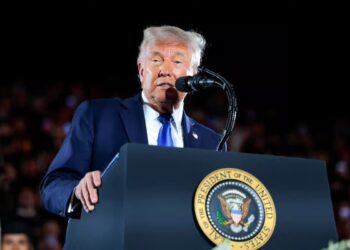
U.S. President Donald Trump has repeatedly claimed that Christians in Nigeria face genocide and has previously threatened military action. Nigeria’s government has rejected those claims, acknowledging serious security challenges but denying that a genocide is taking place.
Despite the tensions, U.S. Africa Command, working with President Bola Tinubu’s administration, carried out airstrikes on terrorist targets in Sokoto State on Dec. 25.
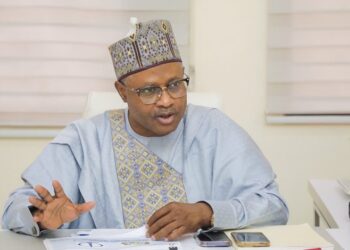
In January, documents revealed that Nigeria entered into a $9 million contract with Washington-based lobbying firm DCI Group to communicate its efforts to protect Christians to the U.S. government. Filings with the U.S. Department of Justice showed the firm was retained on behalf of Nigeria’s national security adviser, Nuhu Ribadu, through Kaduna-based Aster Legal. The agreement was signed Dec. 17, 2025.
Separately, documents published this month showed Nigerian billionaire Matthew Tonlagha signed a $120,000-a-month contract with lobbying firm Valcour to engage U.S. media, Congress and the Trump administration for six months to promote U.S.-Nigeria relations. Valcour was founded in 2023 by Matt Mowers, a former State Department adviser during Trump’s first term.