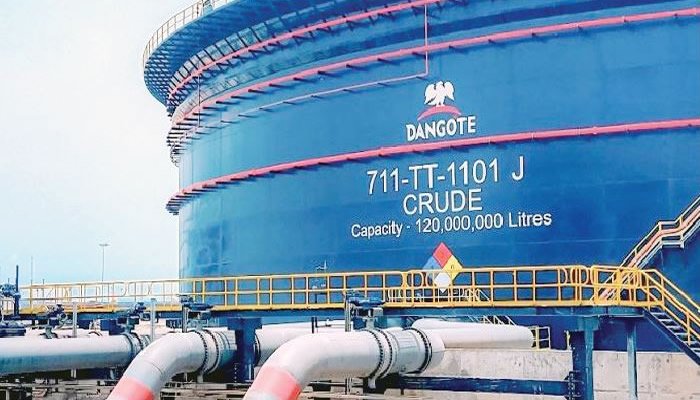
Dangote Petroleum Refinery and Petrochemicals exported an estimated 1.66 billion liters of refined petroleum products in April 2026, according to fresh data released by the Nigerian Midstream and Downstream Petroleum Regulatory Authority, underscoring Nigeria’s growing role as a fuel export hub amid mounting geopolitical tensions in the Middle East.
An analysis of the regulator’s April fact sheet showed that the refinery exported about 513 million liters of petrol, 534 million liters of diesel and 615 million liters of aviation fuel during the month.
The exports came as global energy markets faced renewed uncertainty over the security of the Strait of Hormuz following escalating tensions involving the United States and Iran. Industry analysts said fears of disruptions to global fuel supply routes had increased demand for refined products from alternative suppliers, including Nigeria.
The Lekki-based refinery, which has a processing capacity of 650,000 barrels per day, is currently Nigeria’s only major functioning refinery producing sufficient volumes for both domestic consumption and export.
The combined export volume averaged about 55.4 million liters daily, marking the refinery’s highest monthly export performance so far, particularly for jet fuel and diesel.
According to the NMDPRA, local refineries operated at an average capacity utilization of 99.12% in April, with the Dangote refinery accounting for most of the output. The regulator said the refinery operated at full capacity “for most of the days in April.”
The report also showed that domestic refineries received 18.37 million barrels of crude oil in April, up from 13.11 million barrels in March.
Despite rising exports, the refinery continued to meet local supply obligations. Average daily petrol production stood at 53.6 million liters, with 40.7 million liters supplied domestically and 17.1 million liters exported daily.
Diesel production averaged 23.6 million liters per day, with exports accounting for 17.8 million liters daily, more than double the domestic supply volume of 8 million liters per day.
Aviation fuel exports reached 20.5 million liters daily, compared with domestic supply of 2.6 million liters per day.
The strong jet fuel export performance came weeks after domestic airline operators warned of possible disruptions over rising aviation fuel costs.
The latest figures add to indications that Nigeria may have become a net petrol exporter for the first time in decades, driven largely by increased production from the Dangote refinery. The refinery exported about 434 million liters of petrol in March after local production exceeded domestic demand.
The report highlighted Nigeria’s gradual shift from a major importer of refined petroleum products to a regional export center as global fuel trade patterns adjust to geopolitical instability.
The Middle East remains a major source of global aviation fuel exports, with the Strait of Hormuz serving as a critical transit route for crude oil and refined products. Continued instability in the region has tightened supply and pushed up international fuel prices.
The NMDPRA said Nigerians consumed an average of 51.1 million liters of petrol daily in April, slightly above the regulator’s benchmark estimate of 50 million liters. Diesel consumption averaged 17.3 million liters daily, while aviation fuel demand stood at 2.5 million liters per day.
Despite increased local refining activity, petrol prices remained high across Nigeria. The regulator attributed prevailing prices partly to international crude oil costs, which averaged $120.55 per barrel in April, while gasoline prices averaged $1,074.97 per metric ton.
The refinery is expected to play a major role in Nigeria’s energy security and foreign exchange earnings as global fuel markets continue to shift.
The NMDPRA also said it continued issuing licenses for petrol imports despite rising local refining output.