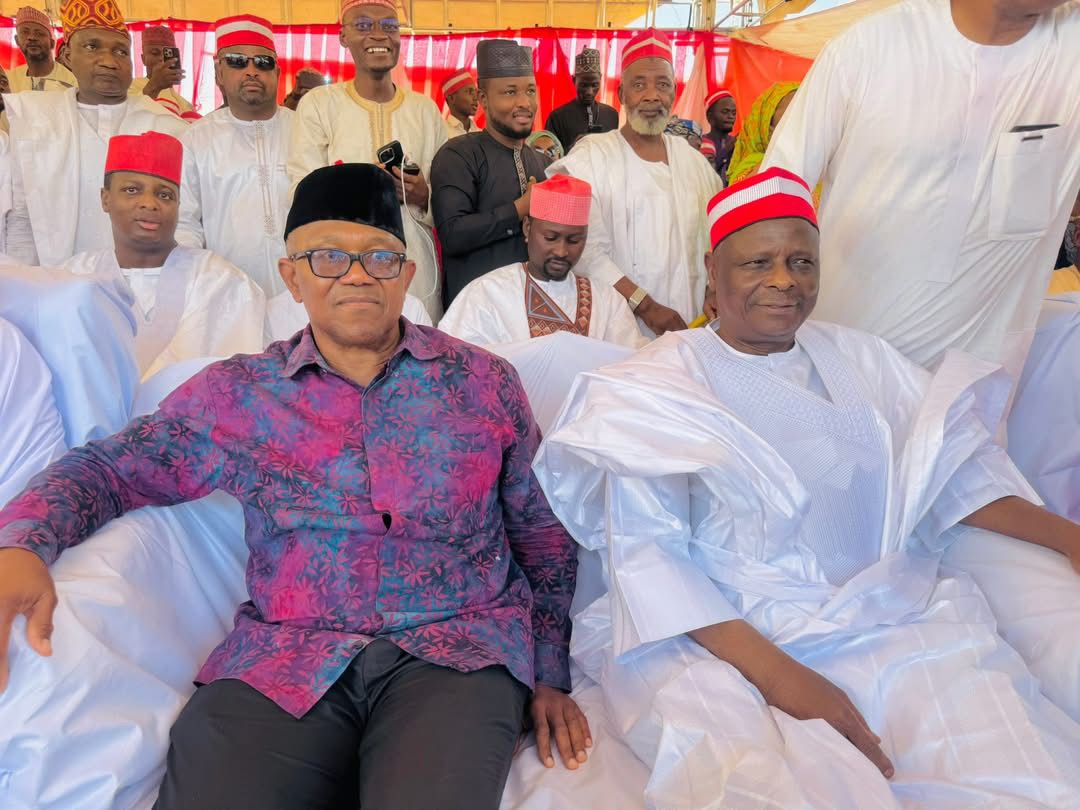
Loyalists of Peter Obi and Rabiu Musa Kwankwaso are urging Nigeria’s opposition to adopt a southern presidential candidate, deepening debate over coalition plans ahead of the 2027 general elections.
The call follows a high-level political meeting in Ibadan where opposition figures, including former Vice President Atiku Abubakar and former Rivers State Governor Rotimi Amaechi , discussed forming a united front to challenge incumbent President Bola Tinubu.
While participants signaled interest in presenting a single candidate, opposition parties remain divided over whether the ticket should be zoned to the South or opened to contenders nationwide.
Nigeria’s informal zoning practice — a power-sharing arrangement between the North and South — has resurfaced as a key issue in the discussions.
Yunusa Tanko, coordinator of the Obidient Movement Worldwide, said retaining the presidency in the South would ensure fairness and continuity, noting that Tinubu, a southerner, is the current officeholder.
He added that Obi has indicated willingness to serve a single four-year term, a move supporters say could ease regional concerns and strengthen consensus-building.
Justin Ijeh, spokesperson for the Obi–Kwankwaso Movement, said zoning, though not constitutionally mandated, remains a practical tool for maintaining balance in Nigeria’s diverse political system.
However, the African Democratic Congress has downplayed zoning as a deciding factor. Its spokesman, Bolaji Abdullahi, said the party would prioritize the electability of candidates over regional considerations.
In contrast, the New Nigeria People’s Party said zoning should still be factored into any consensus arrangement. Party spokesman Ladipo Johnson said a unified candidate must balance national appeal with political sensitivities across regions.
The Social Democratic Party also acknowledged zoning as a relevant consideration but said final decisions would depend on broader political strategy. Its chairman, Shehu Gabam, described zoning as a matter for individual parties to determine.
The renewed push for opposition unity follows lessons from the 2023 election, where multiple candidates split votes against the ruling All Progressives Congress.
Analysts say that while a single opposition candidate could reshape the 2027 race, disagreements over zoning, candidate selection and party interests remain significant obstacles.