Nigeria’s opposition landscape has been reshaped by the departure of two prominent political figures, as defections ripple through the National Assembly and weaken the African Democratic Congress ahead of the 2027 general elections.
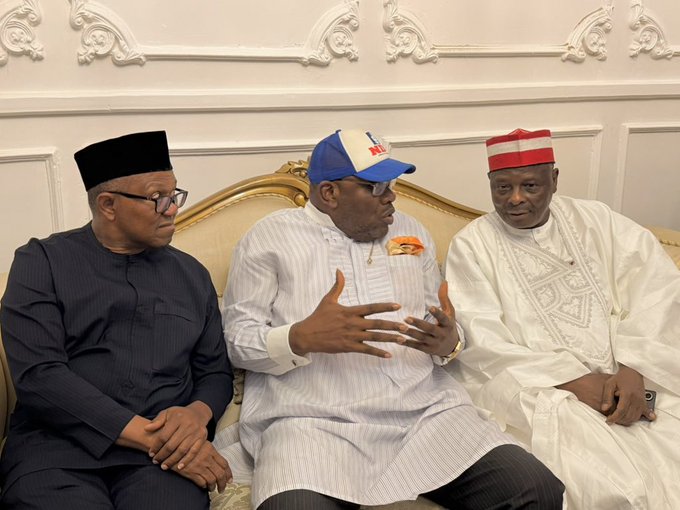
The National Democratic Congress recorded its biggest gains Tuesday, securing 17 members of the House of Representatives and one senator, just days after receiving former presidential candidates Peter Obi and Rabiu Kwankwaso.
The defections follow their formal exit from the African Democratic Congress, a move that has triggered a wave of realignments across both chambers of the National Assembly.
A former Bayelsa West senator, Seriake Dickson, had earlier joined the NDC after leaving the Peoples Democratic Party.
Deputy Speaker Benjamin Kalu, who presided over Tuesday’s House session, said defecting lawmakers cited internal crisis within the ADC, describing the party’s leadership dispute as unresolved “from the ward to the national level.”
Among those who defected to the NDC are lawmakers from Kano, Anambra, Lagos, Edo, Rivers and Kogi states, including Yusuf Datti, Sani Adamu, Zakari Mukhtari, Kamilu Ado, Harris Okonkwo, George Ozodinobi, Lilian Orogbu, Peter Anekwe, Emeka Idu, Ifeanyi Uzokwe and Afam Ogene.
Lagos lawmakers Thaddeus Attah, Oluwaseyi Sowunmi, George Olwande and Jese Onuakalusi also joined, along with Murphy Omroruyi of Edo State and Umezuruike Manuchim of Rivers State.
Separately, Kogi lawmaker Leke Abejide defected from the ADC to the ruling All Progressives Congress.
The defections are widely seen as aligned with the political movements of Obi and Kwankwaso, who wield strong influence in the South-East and North-West, respectively.
The ADC has faced growing internal tensions over leadership disputes, strategy disagreements and coalition breakdowns involving opposition figures including former Vice President Atiku Abubakar.
The collapse of coalition talks and subsequent exits of key figures have weakened the party’s standing in the legislature.
At the height of the defections, the ADC’s House membership reportedly dropped from 24 to six lawmakers.
The Peoples Democratic Party also continues to lose ground, with its House representation falling from 116 members at the start of the 10th National Assembly to 29.
Senate President Godswill Akpabio mocked the ADC during Tuesday’s plenary, describing it as “dead” amid the ongoing defections.
“How many times can you defect in a month? Once. But some have done three times,” he said.
He later suggested lawmakers compile defection lists rather than announce them individually on the Senate floor.
During the session, Akpabio also referenced the political movement of Sen. Enyinnaya Abaribe, noting his transitions across multiple parties.
Sen. Victor Umeh also formally notified the Senate of his defection to the NDC, citing internal divisions and litigation within the ADC as reasons for his departure.
In his resignation letter, Umeh said the party’s crisis made continued membership untenable, adding that he would continue his political work under the NDC platform.
The NDC, however, said it has not decided on automatic tickets for defecting lawmakers, according to its National Secretary Ikenna Enekweizu.
Meanwhile, supporters of Kwankwaso’s political base in Kano have begun distancing themselves from the ADC, with several lawmakers and party officials already joining the NDC.
Despite the defections, ADC National Publicity Secretary Bolaji Abdullahi said the party remains stable, dismissing concerns over its viability.
“The core structures of our party remain intact,” he said, adding that those who left were motivated by personal political interests.
In Rivers State, ADC leaders said the party remains strong at the grassroots level, insisting that its structure is not dependent on individual politicians.
The latest defections underscore a widening realignment in Nigeria’s opposition politics as parties position themselves ahead of the 2027 elections, with coalition efforts, leadership struggles and shifting alliances continuing to reshape the political landscape.